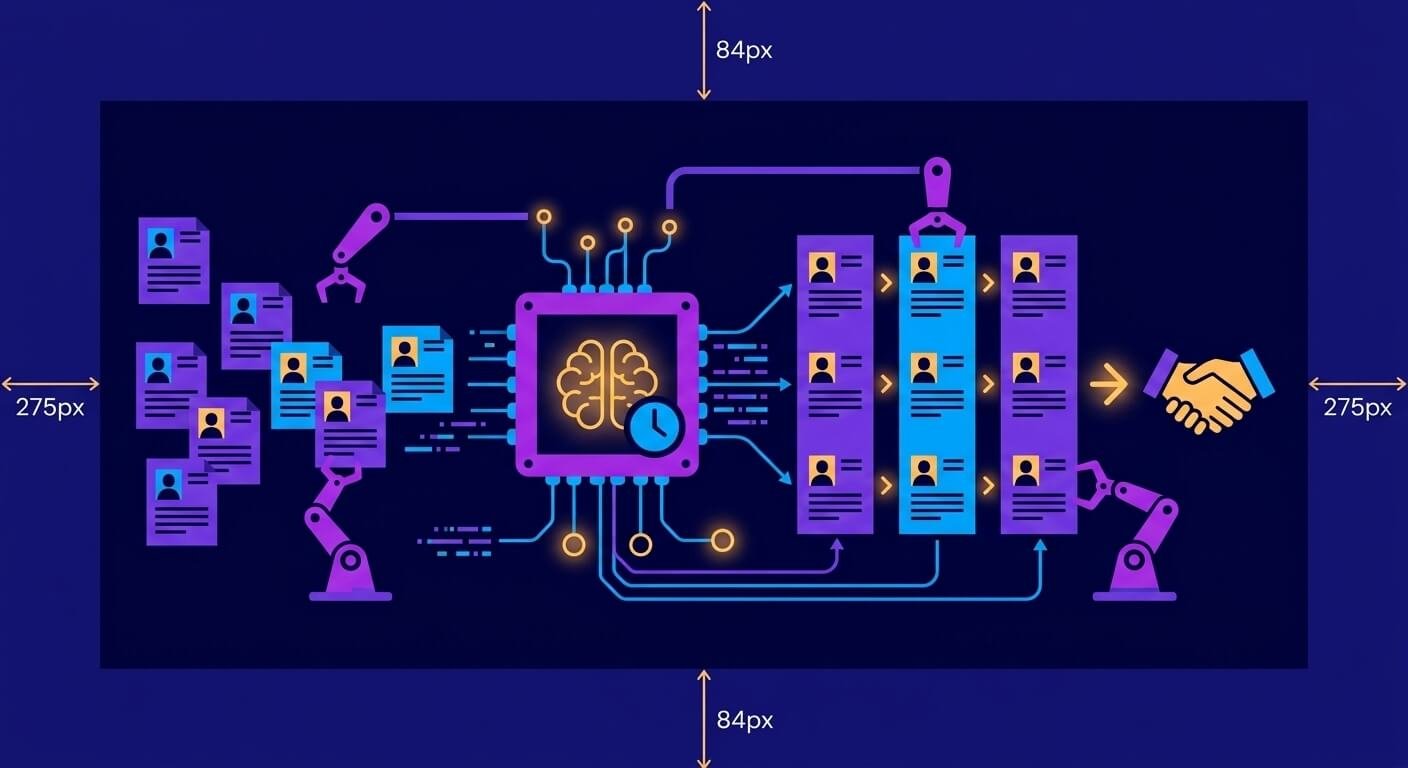

In Primewise’s direct advisory experience across the UK hospitality sector, the single most expensive mistake a scaling operator makes is engaging a growth agency before the operational foundation can support the demand it generates. Knowing when to hire a restaurant marketing agency is not a marketing question it is a capital preservation decision. With approximately 9,000 UK hospitality businesses closing in 2024 alone, according to UK Hospitality’s 2025 Sector Report, and the average UK restaurant net profit margin sitting at just 3–9% as confirmed by CGA/NIQ data, amplifying a flawed operation does not save the business. It accelerates its demise.
Strategic restaurant growth requires capital protection above all else. Elite UK hospitality marketing is about scaling a proven, highly profitable model not testing whether an inconsistent kitchen can survive a busy Friday night. If your internal operations cannot capture and retain the demand an agency generates, you are funding an expensive vanity exercise and driving your restaurant digital marketing ROI into the ground.
Executive Summary
Bringing in a growth partner demands a brutal assessment of your internal readiness. A premier agency will actively reject lucrative retainers if the foundations of the venue present a massive scaling risk. An agency’s role is to act as a multiplier. If your baseline operational score is zero, multiplying it by any marketing spend still yields zero.
EXECUTIVE WARNINGIf you are currently running below a 4.3 Google star rating, operating at under 10% net margin, or cannot document a single standard operating procedure stop here and jump directly to the 'What To Fix Before Spending On Marketing' section. Skipping this diagnostic step will cost you more than the agency retainer itself.
We see operators attempting to outspend their operational deficits every day. One London-based casual dining operator spent £4,200 per month on paid social for six months before engaging us. Their Google rating sat at 3.8. The campaign generated 340 new first-time covers. Of those, 67% left reviews. The average review score was 2.9 stars. The brand was functionally destroyed online within four months. Marketing a broken product against tight UK hospitality margins does not just fail it permanently destroys the brand you spent years building.
The Brutal Truth About Scaling UK Hospitality
The post-Brexit staffing crisis and the UK cost-of-living squeeze have eradicated the margin for operational error. Relying on vanity metrics like follower counts while ignoring table turn times and kitchen throughput capacity is a fast track to insolvency.
You should hire a restaurant marketing agency only when your venue maintains a minimum 4.3 Google rating, possesses documented standard operating procedures, retains a stable team, and can handle a twenty percent increase in covers without breaking kitchen capacity. This benchmark is drawn from BrightLocal’s 2025 Local Consumer Review Survey, which confirms that 4.3 is the minimum star rating at which UK consumers consider a hospitality venue trustworthy enough to visit for the first time. This is the restaurant growth readiness matrix that separates scalable venues from those caught in a destructive volume trap.
The 4 Signs You Are Not Ready For A Marketing Agency
It is entirely counterintuitive for a growth advisor to tell you to keep your money, but capital preservation is critical when structural flaws guarantee marketing failure. Strict disqualification criteria exist to protect the operator from operational suicide. Pumping demand into a venue that cannot handle it creates permanent brand damage and negative guest sentiment that no future campaign can reverse.
If you recognise your venue in any of the following descriptions, spending on external marketing will only drive low-yield volume into a leaking bucket. Fix the core operation before you amplify the message.
Core Product Is Broken Or Inconsistent
Pouring marketing fuel on a fundamentally flawed food or service offering leads directly to irreversible reputational damage. If the kitchen pass lacks stringent quality control, food consistency fluctuates drastically from plate to plate. A guest who receives an overcooked steak after seeing a perfectly styled advertisement feels deceived and that deception translates immediately into permanent brand damage.
In an era where a restaurant’s Google review average dictates footfall, paying to acquire a guest who leaves a one-star review is a catastrophic misuse of capital. Marketing can never fix a bad plate of food. It only ensures more people know about it faster.
Team Is Untrained Or Dangerously Understaffed
Driving high-intent demand into a venue that lacks competent floor staff destroys customer lifetime value at the point of delivery. The UK hospitality sector currently carries approximately 100,000 unfilled vacancies, according to the UK Hospitality Labour Shortage Report 2024. Expecting a stressed, skeleton crew to deliver a premium experience during peak service is a strategic failure, not just an operational inconvenience.
The April 2025 National Living Wage increase to £12.21 per hour for workers aged 21+ a 6.7% year-on-year rise, as confirmed by GOV.UK guidance has squeezed payroll to the point where operators routinely cut shifts to protect margins. This creates immediate service breakdowns the moment an agency succeeds in driving footfall. If your team cannot confidently upsell a table or manage the floor during a rush, you are not ready to scale.
No Capacity To Handle More Covers
If your kitchen is operating above 70% of its maximum docket throughput capacity during peak service typically defined as more than 14–18 covers per hour per kitchen section in a mid-market venue any marketing-driven increase in reservations will statistically result in a service failure rate above 30%, based on industry kitchen throughput modelling. A maxed-out floor leads to frustrated guests waiting past their reservation times and a kitchen team that collapses under the ticket printer.
You must possess the physical and operational elasticity to turn tables efficiently before you invite more guests through the door. Without verifiable capacity headroom, marketing simply funds chaos and accelerates staff burnout.
Local Positioning And USP Are Completely Undefined
In a highly cautious consumer market, generic marketing fails spectacularly. If your venue lacks a compelling reason to visit over the competitor next door, your ad spend is entirely wasted. The dining public requires a definitive Unique Selling Proposition to justify parting with their disposable income in the current cost-of-living environment.
Without a defined competitive moat or an understanding of local search intent, your venue blends into the background of a saturated market. A marketing agency cannot invent a soul for a restaurant that lacks a clear identity. You must know exactly who you serve and why you are the superior choice before you spend a single pound broadcasting it.
| Readiness Indicator | Not Ready | Ready To Scale |
|---|---|---|
| Google Rating | Below 4.2 stars | 4.3 stars or above |
| Net Profit Margin | Below 10% | 10% and above |
| Staff Retention | High turnover, unstable team | Low turnover, stable core team |
| SOP Documentation | None or informal notes | Fully documented procedures |
| Kitchen Capacity | Above 70% at peak | 20–30% verified headroom |
| Defined USP | Generic or unclear | Competitor-differentiated offer |
What To Fix Before Spending On Marketing
For operators who have self-disqualified, the mandate is clear. Halt all acquisition spending immediately and turn inward. The first priority is menu engineering to enforce strict margin control. You must ensure that every dish leaving the kitchen is financially viable under the current standard 20% VAT rate applied to UK restaurants and monitor the ongoing UKHospitality lobbying campaign for a permanent reduced rate of 12.5%, which could materially shift your margin structure if enacted. Additionally, account for the full weight of hospitality business rates UK operators face, which continue to compress already thin margins and must be modelled into any scaling financial plan before a single pound is committed to paid acquisition.
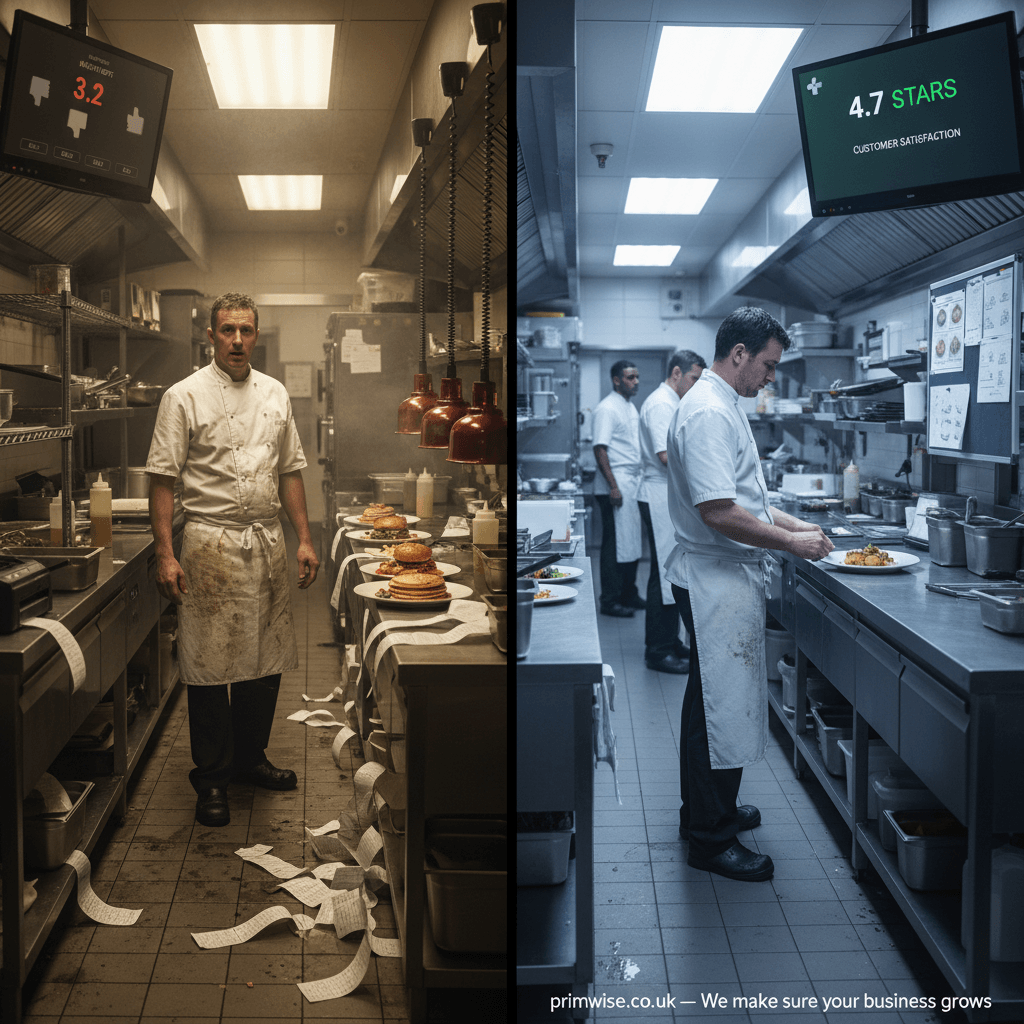
Before contacting an agency, execute the following internal audits to prepare your business for high-volume service:
- Implement comprehensive staff training protocols to handle peak service stress without breaking the dining experience.
- Analyse POS analytics to identify and remove low-margin dishes that slow down the kitchen pass.
- Document stringent standard operating procedures so the venue functions seamlessly without your constant physical presence.
- Lock down your supply chain to ensure consistent ingredient quality regardless of footfall volume.
Only when these operational pillars are completely secured and validated by consistent customer feedback should you consider reopening your marketing budget. Operators who have completed this internal audit and are confident their foundations are solid can request a direct operational readiness assessment at primewise.co.uk the advisory takes thirty minutes and delivers a frank verdict on scaling readiness, not a sales pitch.
Signs You Are Ready To Scale With An Agency
When the internal mechanisms of a venue are tightly calibrated, an elite agency partnership becomes a devastatingly effective growth lever. These operators possess predictable revenue models and scalable capacity, making them the ideal client for aggressive market expansion. At this stage, marketing is no longer a gamble it is a mathematical certainty built on a proven operational foundation.
Dialled In Operations And Consistent High Ratings
A strong, consistent product acts as a multiplier for any marketing spend, systematically turning first-time guests into regular patrons. When your customer satisfaction is universally high, organic word-of-mouth creates a self-sustaining growth loop alongside your paid acquisition efforts. A critical and often overlooked mechanism here is your Google Business Profile optimisation actively managing your GBP listing, responding to every review, maintaining accurate hours, and publishing regular photo updates directly influences your local search ranking and the first impression delivered to high-intent searchers before they even visit your website.
High guest retention rates drastically increase Customer Lifetime Value. An agency can confidently bid aggressively for new customers because the venue’s impeccable service guarantees those customers will return multiple times, fully amortising the initial acquisition cost and driving exceptional restaurant digital marketing ROI across every campaign.
Scalable Capacity Without Breaking The Pass
True readiness means the venue can handle an influx of twenty to thirty percent more covers without a noticeable drop in service quality. Operational elasticity allows the kitchen to absorb sudden spikes in dockets while maintaining flawless presentation and precise timing. This seamless dining experience during peak hours is the hallmark of a professional operation ready to scale aggressively.
When service flow is mapped and executed perfectly, marketing drives actual, bankable profit rather than operational stress and inevitable staff burnout. This is the moment where external spend transforms from a cost line into a compounding profit engine.
High Margin Offers Engineered For Profitability
Elite restaurant scaling pivots the focus entirely from pure volume to aggressive profitability. Marketing is deployed strategically to promote high-yield items that offset UK inflation, rather than simply filling seats with low-spend diners who congest table turn times. Applying restaurant conversion rate optimisation principles at this stage analysing which menu items, booking flows, and promotional offers generate the highest revenue per cover allows an agency to target spend with surgical precision rather than broad acquisition.
An agency will target high-margin covers, private dining packages, corporate events, and aggressively drive drinks and desserts yield. When the venue’s offer is engineered for profitability, the return on ad spend becomes exponential, turning the marketing budget into a predictable profit generation engine.
Local SEO And Near-Me Search Intent Are Leveraged
A marketing agency working with a ready operator must leverage the full architecture of local search from day one. This means deploying optimised Google Business Profile signals, structuring the website with local schema markup, and mapping content to near-me search intent queries the search behaviour that dominates UK restaurant discovery in 2026. Operators who have already built a strong review base and consistent NAP (Name, Address, Phone) data across directories give an agency a commanding head start in local organic rankings.
Without this local SEO foundation in place, even substantial paid media budgets face suppressed visibility in the search surfaces where UK diners actually make booking decisions. The agencies that deliver transformative results in UK hospitality understand that paid and organic local search must work as a single, coordinated system.
Frequently Asked Questions
Operators frequently grapple with the economics and timelines of engaging external growth partners. These answers clarify the expectations, hospitality marketing retainer cost UK operators should plan for, and the financial realities of scaling a venue in the current market.
How Much Should A UK Restaurant Spend On Marketing
A healthy hospitality business should allocate between four and six percent of gross revenue to marketing, rising to eight percent during aggressive scaling or repositioning. Retainers for elite UK restaurant marketing agencies typically start at £2,000 per month, excluding ad spend a figure that reflects access to a multidisciplinary team rather than a single generalist hire.
The investment must be viewed through the lens of return on ad spend and customer lifetime value. Underspending on a cheap agency inevitably produces generic output that fails to move the needle, wasting the entire budget.
Key Takeaway: If your monthly revenue cannot comfortably absorb a £2,000–£4,000 hospitality marketing retainer cost UK agencies charge, plus separate ad spend, without threatening cash flow, you are not at the scaling stage.
How Long Does It Take To See ROI
A premier agency requires a minimum of ninety days to establish baseline metrics, test creatives, and optimise campaigns for local search intent. While operators may see an initial spike in bookings within four weeks, sustainable, predictable return on investment takes three to six months to fully mature.
Operators demanding overnight miracles usually possess critical cash flow issues and represent high-risk clients for any reputable growth partner. Hospitality marketing builds a local monopoly it is not a day-trading exercise.
Key Takeaway: Commit to a minimum six-month engagement before evaluating true ROI; any shorter evaluation window measures noise, not signal.
Should I Hire An In-House Manager Or An Agency
Hiring an in-house marketing manager in the UK typically costs between £35,000 and £50,000 annually, factoring in National Insurance and pension contributions providing you with one individual, often a generalist. Engaging a premium agency provides access to copywriters, media buyers, SEO strategists, and paid media specialists for a fraction of that cost.
In-house hires are generally only recommended when a hospitality group scales beyond five locations and requires a dedicated brand director to manage multiple external agency partners.
Key Takeaway: For single-site or small multi-site operators, the agency model is almost always more capital-efficient than an in-house hire at this stage of growth.
Agency vs. Freelancer What UK Operators Get Wrong
Freelancers offer an attractive cost entry point, but they structurally cannot deliver the integrated, multi-channel execution that scales a hospitality business. A freelancer managing your Instagram cannot simultaneously run your Google Ads, optimise your local SEO, and produce conversion-focused copy in a coordinated model; the three disciplines must work together, or they produce diminishing returns independently.
A premium agency operates as a single, accountable growth unit where paid media, SEO, and content strategy are aligned to a single revenue objective. For any operator serious about market dominance, the freelancer model is a false economy that delays results and fragments brand positioning.
Key Takeaway: Freelancers are appropriate for single-channel tactical tasks; multi-channel restaurant growth requires an agency with an integrated team structure.
What Is The Minimum Profit Margin Required Before Scaling
Before deploying aggressive marketing capital, a UK venue should be operating at a minimum net profit margin of ten to twelve percent, according to hospitality benchmarking data published by Crowe UK and financial analysis from Caterer.com. Attempting to scale a business running at break-even or at single-digit margins is extremely dangerous any increase in customer acquisition cost can immediately push the venue into the red.
Marketing is an amplifier of your current financial reality. If your menu engineering and labour costs are misaligned, scaling will only multiply your losses. Secure margin control first, then invest in acquiring high-yield volume.
Key Takeaway: A sub-10% net margin is a hard stop fix the financial architecture before committing a single pound to external marketing. If your venue is hitting these thresholds and you are ready to discuss a growth strategy built around your specific market position, Primewise works exclusively with UK hospitality operators who have already done the hard operational work. Start the conversation at primewise.co.uk.