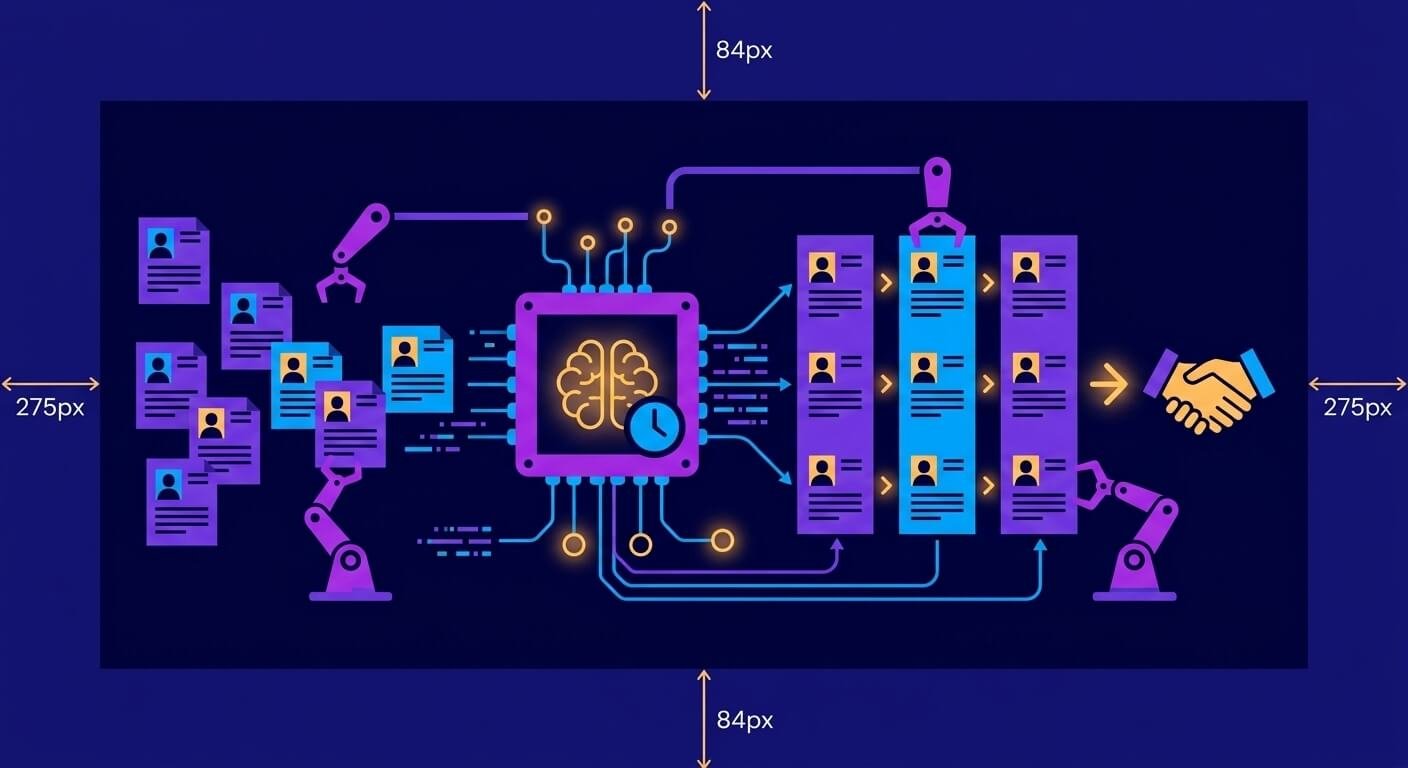
The best restaurant CRMs for loyalty and growth in the UK do one thing that generic software cannot: they unify fragmented guest data from WiFi capture points, booking engines, and EPOS terminals into a single, commercially actionable profile. According to CGA Strategy’s 2025 UK On-Trade Report, the average UK casual dining guest visits just 2.3 times annually without a structured loyalty programme, compared to 4.1 times when enrolled in an automated CRM-driven retention journey, a 78% uplift in visit frequency that directly protects margin in the toughest trading environment a generation of UK operators has faced. With ONS Consumer Price Inflation data confirming sustained pressure on household discretionary spend throughout 2025 and into 2026, retaining an existing guest is now estimated to cost five times less than acquiring a new one. Working with a specialist restaurant marketing agency UK can accelerate your platform selection and deployment timeline significantly, but this guide gives every operator, from a single-site café owner to a franchise CFO, the independent intelligence required to make the right procurement decision before signing a contract.
What a Restaurant CRM Actually Does
A restaurant CRM is a centralised software platform that ingests transactional, behavioural, and demographic data from every guest touchpoint EPOS spend, online reservations, WiFi logins, and delivery orders and converts that raw data into automated, personalised marketing that drives measurable repeat footfall. Unlike a standalone loyalty app or a basic email newsletter tool, a true hospitality CRM tracks Customer Lifetime Value, purchase frequency, and lapsed-visit patterns at an individual guest level, enabling operators to send the right offer to the right person at the exact moment they are most likely to return. The commercial result is a permanent structural shift away from blanket discounting and towards high-margin retention marketing.
EXECUTIVE SUMMARYFor independent venues, Stampede delivers the fastest ROI through frictionless WiFi capture. For casual dining groups and pub operators, Airship's lapsed-journey automation is best-in-class. Fine dining establishments should invest in SevenRooms for white-glove VIP profiling. Multi-site enterprises require the deep POS analytics of Acteol. Scaling brands with complex segmentation needs should evaluate Sprout CRM.
Who This Guide Is For
Before evaluating individual platforms, operators must honestly assess their venue scale, existing technology stack, and realistic marketing resources. Implementing an enterprise-grade system in a single-site bistro creates unnecessary technical bloat and frustrates floor staff who have no time to navigate complex dashboards. Equally, running a 50-site franchise group on an entry-level WiFi capture tool creates dangerous data silos that make accurate Customer Lifetime Value calculation impossible. The following matrix identifies the correct starting point for every operator type reading this guide.
- Independent café or single-site pub owner. Prioritise low-cost WiFi data capture, flat monthly pricing, and simplified SMS marketing with zero developer requirement.
- Casual dining group director managing 5 to 25 sites. Requires robust lapsed-customer automation, native Zonal or Access Collins integration, and multi-site dashboard reporting.
- Fine dining or premium venue operators must invest in a deep table management CRM with VIP profiling, dietary preference tracking, and pre-payment workflow support.
- Franchise CFO or multi-site enterprise operator with above 25 locations. Demand enterprise-grade POS spend analytics, app-based loyalty programme management, and custom API integration with full data processing agreements.
- The scaling brand Head of Marketing needs advanced dynamic segmentation, delivery platform integration, and behavioural-trigger automation beyond simple visit-frequency rules.
The UK Hospitality CRM Comparison Table
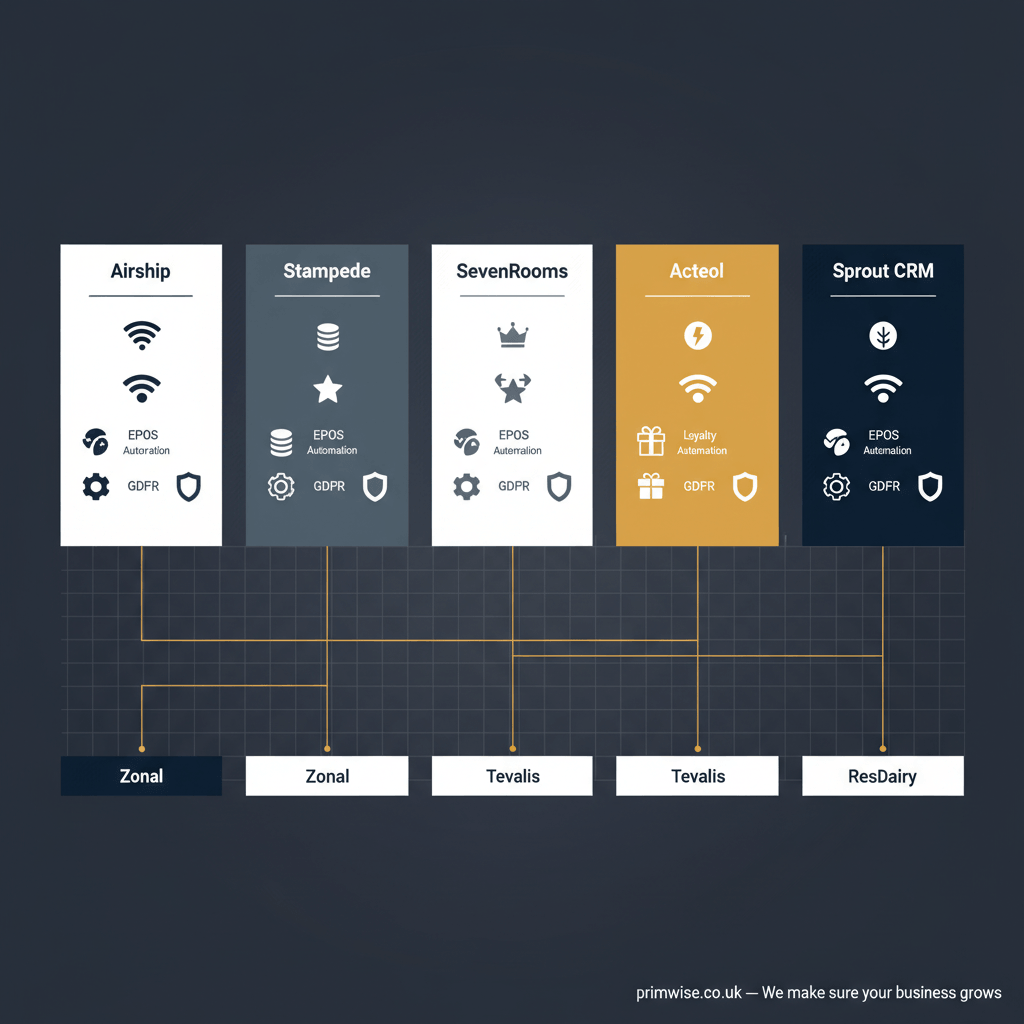
This independently assessed matrix evaluates the five leading hospitality CRM platforms available to UK operators in 2026 across the criteria that matter most to procurement decision-makers: pricing transparency, UK EPOS integration depth, GDPR compliance architecture, automation capability, and setup timeline. Every platform listed has been assessed against native UK system compatibility, including Zonal, Tevalis, ResDiary, and DesignMyNight, because a CRM that cannot communicate bi-directionally with your existing EPOS is commercially worthless regardless of its feature set.
| Platform | Best For | Pricing Model | Key UK Integrations | Free Trial | UK GDPR Compliant | Min. Contract | Avg. Setup Time |
|---|---|---|---|---|---|---|---|
| Airship | Casual Dining and Pubs | Per-contact tier | Zonal, Access Collins | No | Yes | 12 months | 4 to 6 weeks |
| Stampede | Independent Cafes | Flat monthly fee from £49 | Square, Lightspeed | Yes (14 days) | Yes | Monthly rolling | 1 to 2 weeks |
| SevenRooms | Fine Dining | Premium flat fee | Stripe, ResDiary | No | Yes | 12 months | 6 to 8 weeks |
| Acteol | Multi-Site Enterprise | Custom enterprise quote | Access Group, Tevalis | No | Yes | 24 months | 8 to 12 weeks |
| Sprout CRM | Scaling Brands | Tiered SaaS from £199 | Deliveroo, Vita Mojo | Yes (demo) | Yes | 12 months | 4 to 6 weeks |
INDEPENDENT PROCUREMENT WARNINGSelecting the wrong CRM costs UK operators an average of £8,000 to £15,000 in misaligned contracts, failed migrations, and lost trading data. Primewise.co.uk provides vendor-neutral CRM strategy consulting for UK hospitality operators, helping multi-site groups shortlist, negotiate, and implement the right platform for their specific growth stage. If you are evaluating CRM investment above £500 per month, a 30-minute strategy consultation will protect your roadmap before you sign.
How We Evaluated These Platforms
Each platform in this guide was assessed against five independently defined criteria: depth of native UK EPOS integration, GDPR compliance architecture including data processing agreement availability, pricing transparency across all contract tiers, marketing automation capability beyond basic email sends, and verified UK operator case studies demonstrating measurable retention uplift. Platforms were not evaluated on vendor-submitted materials alone. Integration documentation, ICO registration status, and publicly available customer reviews on G2 and Trustpilot were cross-referenced to ensure editorial integrity. This methodology mirrors the procurement rigour applied by hospitality technology consultancies and is designed to give operators the same quality of insight available to enterprise-level buyers.
The Top Restaurant CRM Platforms Evaluated
A granular review of each platform reveals commercially distinct advantages that only become visible when assessed against the specific operational realities of UK hospitality environments. The following evaluations go beyond feature lists to address the practical deployment experience, integration reliability, and realistic commercial outcome each system delivers.
Airship for Casual Dining and Pubs
Airship has established genuine dominance in the UK pub and casual dining sector through its automated lapsed-customer journey architecture, which is built specifically around the transactional rhythms of volume-driven hospitality environments. The platform integrates natively with Zonal and Access Collins, two of the most widely deployed EPOS and booking systems in UK pub and casual dining estates, pulling exact transaction values and visit timestamps to trigger communications the moment a regular patron deviates from their established visit frequency. UK operators deploying Airship’s automated lapsed-customer journeys report average re-engagement rates of 18 to 22 percent within a 90-day recovery window, a performance benchmark that significantly outpaces generic email marketing open rates. The per-contact pricing model becomes highly competitive once a venue builds a database exceeding 5,000 opted-in guests, making Airship a genuinely scalable long-term investment for growing pub groups and casual dining brands committed to data-driven retention marketing.
Stampede for Independent Cafes and Takeaways
Stampede was designed with a clear commercial mandate: remove every barrier between a small hospitality operator and their first 1,000 opted-in customer records. The platform achieves this through its frictionless guest WiFi capture interface, which presents a legally compliant GDPR opt-in screen at the point of WiFi login requiring no developer resource, no hardware change, and no staff training beyond a ten-minute onboarding session. From that initial data capture moment, Stampede automates SMS marketing campaigns and basic CRM segmentation through a dashboard that a single-site operator can manage confidently in under two hours per week. The flat monthly pricing structure starting from approximately £49 eliminates the financial unpredictability of per-contact billing, making Stampede the most commercially accessible entry point into hospitality CRM for independent operators who cannot justify a dedicated marketing resource but understand that building a first-party data asset is now a survival-level business priority.
SevenRooms for Fine Dining and Premium Venues
Premium and fine dining operators require a fundamentally different CRM capability to volume-driven venues: they need guest intelligence that is granular enough to inform a front-of-house team member’s behaviour the moment a returning guest crosses the threshold. SevenRooms delivers precisely this through its deep integration between booking engine data, table management workflows, and a CRM layer that stores dietary preferences, anniversary occasions, preferred seating positions, allergies, and previous order history against individual guest profiles. This white-glove profiling capability directly supports the upselling of pre-payment packages, tasting menu upgrades, and experience add-ons that represent the highest-margin revenue streams in premium hospitality. The platform’s native integration with ResDiary and Stripe ensures that reservation data and payment behaviour flow directly into the guest record without manual intervention, preserving the operational elegance that premium venues demand from every system they deploy.
Acteol for Multi-Site Enterprise Groups
Operating as part of the Access Group technology ecosystem, Acteol is the platform of choice for large UK restaurant groups and pub chains that require enterprise-grade data architecture to manage complex multi-tier loyalty programmes across dozens or hundreds of connected sites. The system’s POS spend analytics capability which ingests granular transaction data from Tevalis and Access Group EPOS infrastructure gives group marketing directors and CFOs the site-level performance visibility required to make accurate investment decisions about loyalty programme mechanics. Acteol’s app-based loyalty framework supports coalition reward structures, gamified punch-card alternatives, and member-exclusive pricing tiers that independent platforms simply cannot replicate at enterprise scale. The 24-month minimum contract and 8 to 12 week average setup timeline reflect the genuine complexity of deploying a system of this calibre, and operators should budget for dedicated onboarding support and POS re-mapping resource alongside the headline subscription cost.
Sprout CRM for Scaling Brands
Sprout CRM occupies a commercially distinct position in the UK hospitality technology landscape, targeting multi-location brands that have outgrown entry-level tools but do not yet require full enterprise infrastructure. The platform’s defining technical capability is its dynamic segmentation engine, which allows marketing teams to construct audience segments based on purchasing behaviour combinations for example, guests who have ordered from a specific menu category more than three times in the past 60 days and have not visited in the past 21 days rather than the simple recency-frequency-monetary models that older CRM architectures rely upon. Sprout’s native integrations with Deliveroo and Vita Mojo are particularly valuable for brands operating across both physical and delivery channels, enabling a unified guest view that captures off-premise spend behaviour alongside dine-in visit data. This cross-channel data consolidation is increasingly critical as delivery platform dependency creates guest relationships that exist entirely outside the operator’s first-party data asset without a CRM layer to recapture them.
Essential UK EPOS and Booking Integrations
The quality of a CRM is determined less by its marketing automation features and more by the depth and reliability of its API connections with the systems that generate your guest data in the first place. UK hospitality operators rely on a specific set of dominant EPOS, reservation, and booking platforms that any credible CRM must integrate with natively, meaning bi-directionally, in real time, without requiring bespoke developer work from the operator’s side. Zonal and Tevalis represent the two most widely deployed EPOS systems across UK pub groups and casual dining chains, respectively, and a CRM without verified native integration with either platform cannot deliver accurate transaction-level guest profiling. ResDiary and DesignMyNight dominate the reservation and event booking layers for independent and group operators, and their booking data, including covers, spend per head, and no-show behaviour, is essential input for meaningful lapsed-guest segmentation. Before signing any CRM contract, operators must request a live integration demonstration using their specific EPOS version and booking platform configuration, not a generic demonstration environment.
GDPR COMPLIANCE ALERTThe Information Commissioner's Office has issued enforcement notices against hospitality operators for collecting guest WiFi data without a lawful basis under UK GDPR Article 6 and PECR Regulations 2003. Every CRM platform on this list incorporates compliant opt-in mechanics, but operators must ensure their WiFi login screens and booking widgets present a genuine, unbundled consent request that meets ICO standards. Failure to comply risks fines of up to £17.5 million or 4% of annual global turnover under the UK GDPR enforcement framework.
CRM Versus Standalone Loyalty App
A standalone loyalty app whether a digital punch card, a points wallet, or a coalition scheme captures transactional behaviour but operates in isolation from the broader guest relationship. A hospitality CRM, by contrast, ingests data from every touchpoint the guest has with your brand and uses that unified profile to trigger contextually relevant communications that a single-purpose loyalty tool can never replicate. The practical distinction for UK operators is this: a loyalty app tells you that a guest has visited eight times; a CRM tells you that the same guest always orders on a Tuesday, has a birthday in three weeks, has not visited in 34 days, and responds positively to SMS over email and then acts on that intelligence automatically without any manual intervention from your marketing team. For venues with fewer than 500 monthly covers, a standalone loyalty app may represent an adequate first step. For any operator with genuine growth ambitions, the absence of CRM-level intelligence is a structural ceiling on retention performance.
Automation Workflows That Drive Measurable ROI
The commercial value of a hospitality CRM is not realised at the point of data capture it is realised through the automated workflows that act on that data without requiring daily manual management from an already stretched operations team. The most commercially impactful automation sequences deployed by leading UK operators in 2026 follow proven structural logic that converts passive guest databases into active revenue generation engines.
- Abandoned booking recovery A triggered SMS or email sent within 90 minutes of an incomplete online reservation, recovering an estimated 12 to 18 percent of abandoned bookings according to UK operator deployment data.
- Birthday group booking incentive An automated high-value offer dispatched 14 days before a guest’s registered birthday, specifically designed to secure large-group table bookings that carry the highest average spend-per-head of any booking category.
- 48-hour post-visit bounce-back A dynamically personalised reward delivered 48 hours after a dining visit, incentivising a second visit within the same calendar month and dramatically improving 30-day return rate metrics.
- Lapsed-guest reactivation sequence A multi-step SMS and email journey triggered when a guest’s visit interval exceeds their personal average by a defined threshold, deploying progressively stronger offers across a 90-day recovery window.
- New member onboarding series A structured three-message welcome journey that educates new loyalty members on programme mechanics, sets visit frequency expectations, and captures additional preference data to improve future segmentation accuracy.
Total Cost of Ownership for UK Restaurant CRMs
The monthly subscription figure quoted in a CRM sales presentation represents only the most visible component of the true total cost of deploying a new platform. UK operators evaluating CRM investment must account for onboarding and implementation fees, which typically range from £500 to £5,000 depending on platform complexity and site count, alongside any bespoke API integration development costs if their EPOS or booking system requires custom connector work. Staff training time represents a genuine operational cost that is rarely factored into procurement business cases: a platform requiring 16 hours of manager training across a 10-site group represents a non-trivial labour investment. Contract exit clauses are the single most commercially dangerous element of CRM procurement; operators should specifically scrutinise minimum contract terms, data portability rights upon termination, and notice period requirements before signing. At the enterprise tier, legal review of the Data Processing Agreement is non-negotiable under UK GDPR obligations.
Red Flags to Avoid When Choosing a Restaurant CRM
Not every CRM vendor operating in the UK hospitality technology market delivers what its sales deck promises. Operators who have experienced failed CRM deployments consistently identify the same warning signs that, in retrospect, were visible during the procurement process but were not given sufficient weight at the point of decision.
- No UK-specific Data Processing Agreement Any vendor unable to provide a formal DPA compliant with UK GDPR before contract signature is operating outside ICO regulatory expectations and creates direct legal liability for the hospitality operator as data controller.
- Integration demonstrated only in a sandbox environment Insist on a live demonstration using your exact EPOS version; sandbox environments routinely mask API compatibility issues that only surface during live deployment.
- Per-transaction or per-SMS pricing hidden in appendices Variable consumption-based fees embedded in contract schedules can multiply the effective cost of high-volume SMS campaigns by three to five times the headline subscription rate.
- No named UK customer references available A vendor unable to provide at least two contactable UK hospitality operators as references for a platform of equivalent scale to your estate should be treated as a significant procurement risk.
- Vendor lock-in through proprietary data formats Confirm in writing that your guest database can be exported in a standard format upon contract termination; platforms that retain data control use this as commercial leverage during renewal negotiations.
Migration Checklist for UK Operators Switching CRM
Transitioning from a legacy CRM or from no CRM at all to a new platform carries operational risk that can be almost entirely mitigated with disciplined pre-launch preparation. The following checklist reflects the standard deployment framework applied by UK hospitality technology consultancies and covers the five highest-risk stages of a CRM migration project.
- Data export and cleansing from legacy systems Extract your existing guest database, remove duplicate records, and validate email and mobile number formatting before import to ensure clean segmentation from day one.
- EPOS re-mapping and transaction sync validation Confirm that every EPOS terminal across every site is correctly mapped to the new CRM and that test transactions flow through to the guest profile dashboard accurately before go-live.
- GDPR consent re-confirmation Any guest record where the original consent mechanism does not meet the new platform’s compliance standards must be suppressed until re-consent is obtained through a compliant channel.
- Staff training and operational briefing Front-of-house teams must understand how the new system affects their workflow, particularly if loyalty redemption or guest profile lookup is integrated into the table management or EPOS interface.
- Go-live testing and 30-day performance baseline Run the platform in parallel with existing systems for the first two weeks post-launch and establish a 30-day performance baseline before drawing conclusions about automation effectiveness.
INDEPENDENT EXPERT SUPPORTPrimewise.co.uk specialises in vendor-neutral CRM shortlisting, contract negotiation, and implementation oversight for UK hospitality operators. For multi-site groups that have narrowed their choice to two platforms and need an independent technical and commercial evaluation before final sign-off, a structured 30-minute assessment from the Primewise team provides the clarity that internal teams consistently lack at this stage of procurement.
Choosing the Right Restaurant CRM for Your UK Venue
The procurement decision ultimately resolves to a straightforward alignment between your current growth stage, your existing technology ecosystem, and the specific retention challenge you need the platform to solve first. Independent operators and single-site venues should begin with Stampede to build a first-party data asset quickly and cost-effectively without requiring specialist marketing resources. Casual dining groups and pub operators with an established guest database should invest in Airship to deploy lapsed-customer automation that delivers measurable re-engagement within 90 days of go-live. Premium and fine dining venues for whom the guest experience is the primary commercial differentiator must invest in SevenRooms to give their front-of-house teams the guest intelligence required to justify premium pricing and pre-payment conversion. Enterprise franchise operators above 25 sites should begin their evaluation with Acteol, given its unparalleled depth of integration with the Access Group technology stack that dominates large UK restaurant group infrastructure. Scaling brands operating across physical and delivery channels simultaneously should evaluate Sprout CRM for its dynamic segmentation architecture and cross-channel data consolidation capability. For operators who have shortlisted two platforms and need independent validation before committing to a contract, primewise.co.uk offers structured vendor-neutral evaluation that protects procurement decisions and accelerates implementation timelines.