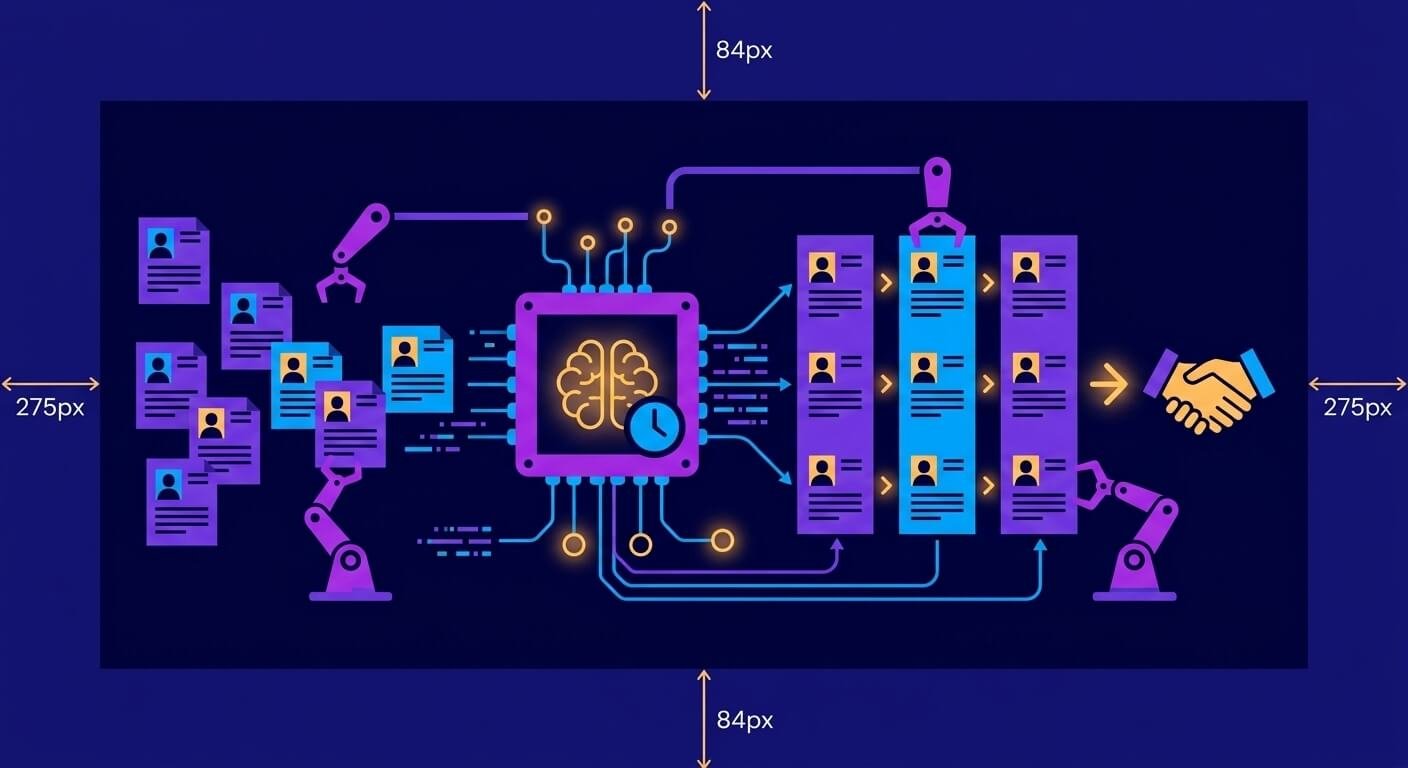

Restaurant marketing consultant fees UK operators pay in 2026 span a wide spectrum, and every pound of that investment must be forensically accountable to real commercial outcomes. In a sector where food-service labour costs rose by 9.8% year-on-year following the April 2025 National Living Wage adjustment to £12.21 per hour (ONS, 2025), and where CGA by NIQ data confirms that UK eating-out visits remain fiercely contested across every price bracket, the luxury of vague brand awareness spend is extinct. What the modern operator needs is not a generic agency but a genuinely expert restaurant marketing partner who speaks the language of the till, maps every fee to a tracked reservation, and protects gross profit with the same rigour as a head chef controls food cost. This guide delivers complete transparency on every engagement model, exposes the contractual traps that quietly drain hospitality budgets, and provides a practical decision framework so you can evaluate any consultant before a single penny is committed.
What Restaurant Marketing Consultant Fees Actually Mean
UK restaurant marketing consultant fees in 2026 range from £120 to £300 per hour, £600 to £1,500 per day, and £2,000 to £8,000 per month on retainer. These figures reflect the professional capacity to drive measurable covers, protect operating margins, and deliver quantifiable revenue uplift within one of the most pressurised commercial environments in the British economy.
This pricing framework is not arbitrary. It represents the baseline cost of engaging specialists who understand hospitality finance at a granular level, including Revenue Per Available Seat Hour (RevPASH the industry’s primary efficiency metric calculating revenue generated per seat per trading hour), Average Check Value, Table Turn Rate, and Reservation Conversion Rate. The variation in cost depends entirely on engagement depth, consultant seniority, and whether the commercial outcomes are contractually guaranteed or merely implied in a pitch deck.
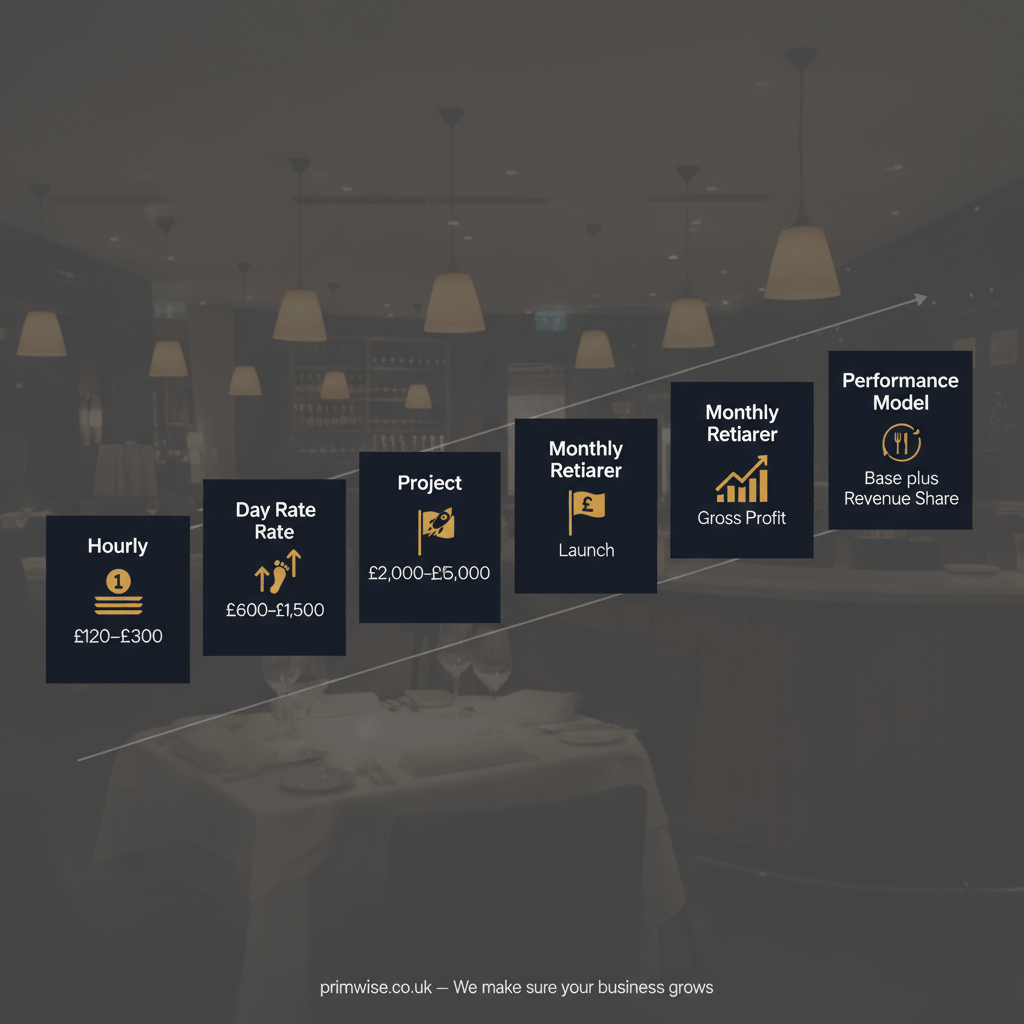
EXECUTIVE SUMMARYUK restaurant marketing consultant fees range from £120 to £300 hourly for triage, £600 to £1,500 daily for strategy, £3,000 to £15,000 for project work, and £2,000 to £8,000 monthly for a Fractional CMO retainer. Every fee structure must be evaluated against a single standard: can the consultant mathematically map their cost to tracked reservations and gross profit uplift? If not, the investment is fundamentally flawed.
Engagement Models and Fee Structures Compared
Procuring external marketing expertise requires precise alignment between your financial commitment and your desired operational outcome. Different commercial challenges demand entirely different billing structures, and understanding this matrix is the difference between a measurable investment and an expensive overhead. The table below provides an immediate comparative reference before each model is explored in depth.
| Engagement Model | Fee Range | Ideal Use Case | Primary ROI Metric |
|---|---|---|---|
| Hourly Rate | £120 – £300 | Crisis triage, LSO audit, funnel diagnosis | Customer Acquisition Cost per cover |
| Day Rate | £600 – £1,500 | Strategy workshop, POS tracking integration | Footfall uplift per trading week |
| Project Fee | £3,000 – £15,000 | Campaign launch, digital ecosystem overhaul | Revenue per launch phase |
| Monthly Retainer | £2,000 – £8,000 | Fractional CMO, private dining lead generation | Gross profit uplift, RevPASH growth |
| Performance Model | Base + 5–15% revenue share | Multi-site expansion, rapid growth groups | Weekly reservation growth, CLV |
Hourly Rates for Triage and Audits
At £120 to £300 per hour, this tier is strictly reserved for high-level tactical interventions where speed is the commercial imperative. Hourly engagements must never be used for routine tasks such as ongoing social media scheduling or standard copywriting the rate is justified only by the seniority of strategic thinking being deployed in a concentrated window.
Operators should deploy this model for crisis communications, local search engine optimisation audits, or diagnosing structural failures within a Meta Ads funnel that is bleeding budget against zero seated reservations. The deliverable is an immediately actionable blueprint that an internal team can execute the same week to stem identifiable revenue leaks before they compound into a quarterly P&L problem.
Day Rates for Deep-Dive Strategy
Ranging from £600 to £1,500 per day, this model secures intensive, focused expertise in a single contained session. A premium day rate buys a deployable roadmap engineered around your specific site constraints not a generic slide deck recycled from a previous client and it protects the restaurant from the compounding cost of prolonged open-ended consulting arrangements.
These sessions typically involve strategy workshops with front-of-house management, marketing architecture design calibrated to your Average Check Value targets, and the direct integration of tracking mechanisms into the point-of-sale system so that every subsequent marketing decision is data-informed rather than instinct-led. The non-negotiable output is a highly structured operational plan with defined weekly milestones and a clear line of sight to footfall uplift.
Project Fees for De-Risked Execution
Project fees generally sit between £3,000 and £15,000, and they function as a structural insurance policy against scope creep, the single most common cause of marketing budgets haemorrhaging beyond their original allocation. This model empowers the operator to demand strict deliverable boundaries tied to specific launch milestones rather than billing hours that accumulate invisibly.
Common applications include a comprehensive restaurant launch campaign, a full digital ecosystem overhaul covering Google Business Profile, reservation platform integration, and paid media architecture, or a highly targeted festive trading push designed to maximise Revenue Per Available Seat Hour across the highest-yield weeks of the calendar year. Payment schedules must be rigorously phased against KPI checkpoints, not arbitrary calendar dates.
Monthly Retainers and the Fractional CMO Model
The monthly retainer is the most prevalent engagement model, spanning £2,000 to £8,000, and it demands the sharpest commercial scrutiny before signature. The critical distinction that every operator must draw is between a content scheduling service wearing a strategic label and a genuine revenue-driving partnership operating as a Fractional Chief Marketing Officer with full accountability for your acquisition economics.
A premium retainer at this level guarantees proactive management of the entire digital footprint. This encompasses private dining lead generation through targeted LinkedIn and corporate outreach sequences, automated flash reporting tied directly to weekly covers and gross profit, and the continuous optimisation of Customer Acquisition Cost per cover systematically displacing vanity metrics with financial ones. For operators seeking a Fractional CMO model that guarantees RevPASH as a primary KPI rather than follower counts, PrimeWise at primewise.co.uk operates exclusively within the UK hospitality sector, structuring every retainer agreement around tracked gross profit uplift and reservation conversion data.
OPERATOR PROTECTIONDemand that any retainer agreement specifies exactly which senior individual manages your account week-to-week, what reporting cadence is guaranteed, and which KPIs trigger a contract review. A consultant who resists this level of contractual clarity is protecting their margin, not yours.
Equity and Performance Models
Modern operators, particularly multi-site restaurant groups planning rapid UK expansion, are increasingly adopting performance-based models that blend a lower base retainer with a percentage of verified revenue uplift typically 5% to 15% of the incremental gross profit generated above an agreed baseline. This structure creates the ultimate commercial alignment, making the consultant’s financial success entirely contingent on yours.
Offering an equity stake or performance commission protects immediate cash flow during the capital-intensive phases of site acquisition or concept repositioning. It also provides a self-regulating quality control mechanism: a consultant earning on performance has zero commercial incentive to optimise for anything other than profitable, sustainable reservations and a growing Customer Lifetime Value in hospitality terms.
London Versus Regional Pricing Disparities
Operating a hospitality venue in Mayfair or Fitzrovia presents entirely different commercial realities from running a site in Manchester’s Northern Quarter, Edinburgh’s Old Town, or Birmingham’s Digbeth neighbourhood. Geographical location is not merely a postcode, it is a primary cost variable that dictates both the marketing investment required and the calibre of specialist you can access at a given price point.
London-based agencies carry substantially higher overheads and must navigate an intensely saturated media landscape where securing top-tier editorial coverage or leveraging elite public relations networks commands a measurable premium. Based on agency overhead data, London briefs command a 30% to 45% premium over comparable Manchester engagements. Edinburgh operators benefit from a tighter agency market with average retainers running approximately 20% below London equivalents though Edinburgh’s festival season creates a distinct annual spike in campaign investment requirements that regional budgets must anticipate. Birmingham’s dining density in areas like the Jewellery Quarter is generating increasing marketing competition, narrowing the gap with London rates for premium positioning briefs.
Regional campaigns rely more heavily on hyper-localised search intent, community partnership activation, and precision-targeted digital advertising calibrated to specific postcode-level demographics. An operator paying London rates for a Manchester brief is effectively subsidising an agency’s Soho office rent, not their own Reservation Conversion Rate.
REGIONAL INTELLIGENCEAlways verify that your consultant has an active regional network in your specific city not a theoretical understanding of it. A London agency without established Manchester media contacts, food critic relationships, or local influencer pipelines cannot replicate the commercial value of a regionally embedded specialist, regardless of their headline credentials.
Spotting Senior Fees for Junior Work
The bait-and-switch is the most pervasive threat in the UK digital marketing sector, and it is particularly acute in hospitality where the consequences of misallocated ad spend are felt immediately on a nightly revenue report. The mechanism is consistent: a restaurant operator commits to a premium monthly retainer based on an impressive pitch from a seasoned strategist, then the daily account management is quietly transferred to an inexperienced junior executive within weeks of contract signature.
Protecting your hospitality margins requires contractual rigour from the outset. Insist that the retainer agreement names the specific individual responsible for your account, defines their minimum weekly input in hours, and stipulates that any change of account lead requires written operator consent. An agency’s internal margin structure should never be subsidised by degrading the strategic oversight applied to your marketing investment.
Reporting Reality and Vanity Metrics
The calibre of a hospitality marketing consultant is immediately apparent in the structure and language of their reporting suite. Junior account managers consistently highlight aesthetic engagement rates, follower growth trajectories, and video view counts metrics that are entirely disconnected from the financial performance of a dining room on a Tuesday evening in February.
Senior hospitality marketers speak exclusively the language of the till. Their weekly reports focus on Customer Acquisition Cost per cover, Table Turn Rate against RevPASH benchmarks, the direct attribution between ad spend and seated reservations confirmed through point-of-sale integration, and Average Check Value trends by daypart. If the data presented does not reflect measurable financial growth, the metrics being reported are commercially irrelevant regardless of how impressive they appear in a visual dashboard.
Proactive Agility Versus Reactive Excuses
The definitive test of genuine hospitality marketing expertise is consultant behaviour during operational disruption. A junior team managing on autopilot will allow broad awareness campaigns to run blindly during a rail strike, a major local event diversion, or an unexpected kitchen closure burning advertising budget against an empty dining room and generating zero actionable response.
A seasoned professional demonstrates proactive agility that protects gross profit margin in real time. They will immediately pause broad-reach campaigns, pivot to neighbourhood corporate client email outreach, adjust bidding strategies toward delivery and collection revenue where applicable, and document the adjusted strategy with full financial rationale. That behavioural distinction is precisely what justifies the premium investment in a senior-level engagement.
Red-Flag Contractual Clauses to Reject
No competitor resource on this topic addresses the legal and contractual dimension of hiring a restaurant marketing consultant, yet it is the area where the most financially damaging mistakes occur long after the pitch enthusiasm has faded. Understanding the specific clauses that extract value from operators and transfer risk to them is non-negotiable before any agreement is signed.
The minimum contract duration trap is the most common. Any retainer requiring more than a 30-day rolling notice period without pre-agreed, measurable performance benchmarks should be rejected outright. A consultant confident in their ability to drive Revenue Per Available Seat Hour growth has no commercial reason to lock you into a six-month minimum with no performance exit clause. This clause exists exclusively to protect agency revenue, not operator outcomes.
Asset ownership on termination is frequently overlooked and can be catastrophically costly. Your retainer agreement must explicitly confirm that all paid advertising accounts, social media profile credentials, CRM databases, email marketing lists, website analytics access, and creative assets remain the sole property of the restaurant operator upon contract end. Agencies that retain ownership of ad accounts as leverage for renewal are engaging in a practice that the Competition and Markets Authority has increasingly scrutinised within the UK digital marketing sector.
GDPR-compliant data handling clauses specific to restaurant CRM databases containing customer dining preferences, birthday data, corporate account details, and private dining enquiry histories must be explicitly defined within any Data Processing Agreement appended to the retainer. The Information Commissioner’s Office holds hospitality operators directly liable for third-party data mishandling, making this a personal legal risk for the business owner, not merely an operational inconvenience.
CONTRACTUAL CHECKLISTBefore signing any retainer: confirm named account lead, 30-day rolling notice with performance benchmarks, full asset ownership on exit, and a GDPR-compliant DPA covering all customer data. These four elements are non-negotiable and any resistance to them is a red flag of the highest order.
The Consultant Selection Scoring Framework
Rather than relying on instinct or presentation polish when evaluating a restaurant marketing consultant, operators benefit significantly from applying a weighted decision framework that imposes commercial discipline on what is fundamentally a high-stakes hiring decision. The criteria below carry specific weightings that reflect their relative impact on gross profit outcomes in a UK hospitality context.
- Hospitality-sector exclusivity (25%): Does the consultant work exclusively or predominantly within UK food and beverage? Generic digital marketers lack the RevPASH literacy and sector-specific network that hospitality demands.
- KPI definition in gross profit terms (25%): Can they immediately translate their proposed strategy into a specific gross profit uplift figure with a defined measurement methodology? Vague outcome language is a disqualifier.
- Seniority of named account lead (20%): Who specifically will manage your account week-to-week? Insist on meeting that individual before signature, not the business development director who delivered the pitch.
- Regional network relevance (15%): Does the consultant have verified media contacts, food critic relationships, and influencer pipelines in your specific city and postcode market?
- Contractual flexibility and exit terms (15%): Is the notice period 30 days rolling with performance benchmarks? Are all digital assets confirmed as operator-owned upon termination?
Applying this framework to every consultant shortlist eliminates emotionally driven decisions and surfaces the engagements most likely to generate a measurable return on investment within the first 90 days of the retainer period.
DATA BENCHMARKUK Hospitality's 2025 sector report and CGA by NIQ's UK eating-out market data both confirm that independent restaurants spending between 5% and 7% of gross annual turnover on marketing with a dedicated specialist consistently outperform sector averages on RevPASH by a margin of 18% to 23%.
How Much UK Restaurants Should Spend on Marketing
The question of absolute spend is inseparable from the question of strategic intent. Industry consensus for 2026 UK independent restaurants sits at 3% to 6% of gross annual turnover, with fast-casual operators at the lower band and premium dining venues investing 7% to 9% of turnover when launching, repositioning, or defending market share against new neighbourhood competition.
Multi-site groups operating above ten covers-per-site-per-service at an Average Check Value above £55 should treat marketing investment as a capital allocation decision rather than an operational expense line. The 2025 UKHospitality lobbying submissions on National Living Wage impacts explicitly identify marketing ROI accountability as a critical lever for margin protection, specifically citing the need for operators to shift from output-based to outcome-based agency relationships. That shift begins with understanding precisely what the fees listed in this guide are actually purchasing.