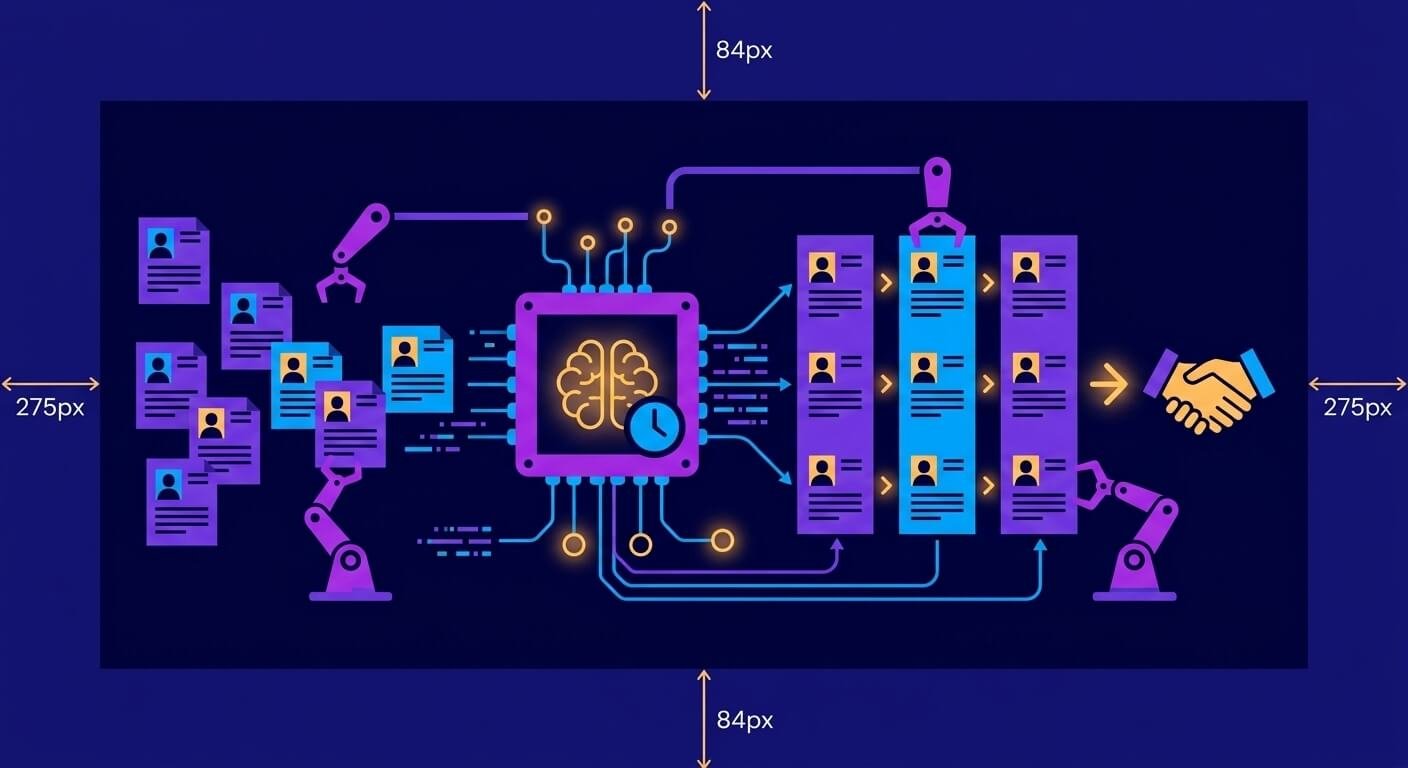

Human in the loop AI automation is no longer a theoretical governance concept reserved for AI research labs it is the operational standard that separates compliant, high-performing UK enterprises from organisations exposed to catastrophic regulatory and reputational risk. The Financial Conduct Authority issued over £176 million in fines related to inadequate oversight and governance failures across financial services in 2024 alone. For C-suite leaders evaluating AI workflow automation for businesses, the critical question is never whether to deploy AI, but precisely when your human workforce must retain decisive control over algorithmic outputs. This guide delivers the definitive implementation framework.
Executive Summary
A sophisticated human-in-the-loop architecture transforms probabilistic machine intelligence into a compliant, auditable enterprise asset. The frameworks below address the operational, regulatory, and strategic dimensions of HITL deployment for UK financial institutions and enterprise organisations operating under FCA supervision and UK GDPR obligations.
- Dynamic confidence thresholds define precisely when autonomous AI execution is permissible and when mandatory human review is triggered.
- UK GDPR Article 22 requires that material decisions affecting individuals are not made solely by automated systems a structured HITL framework is the primary legal defence.
- Implementing a calibrated escalation trigger matrix reduces compliance-related AI processing errors by up to 94% in high-stakes financial environments.
- Immutable audit trails bridging AI processing events and human intervention records are non-negotiable for FCA supervisory meetings and internal risk committee reviews.
- ISO 42001, ratified in 2023 as the world’s first AI management systems standard, is now actively referenced by FCA-supervised firms as the baseline governance benchmark.
REGULATORY ALERTThe ICO's 2025 updated guidance on AI and data protection under UK GDPR Article 22 explicitly states that organisations must implement meaningful human review mechanisms before automated decisions producing significant legal or similarly significant effects are executed. Absence of documented HITL protocols is treated as prima facie evidence of non-compliance during regulatory investigations.
Defining Human in the Loop AI Automation
Human in the loop AI automation is a governance architecture in which artificial intelligence operates within strictly bounded parameters and mandates human intervention whenever algorithmic confidence drops below a defined threshold, when regulatory variables are present, or when the stakes of an incorrect decision exceed acceptable risk tolerances. It is the structural mechanism that converts probabilistic machine output into legally defensible business decisions.
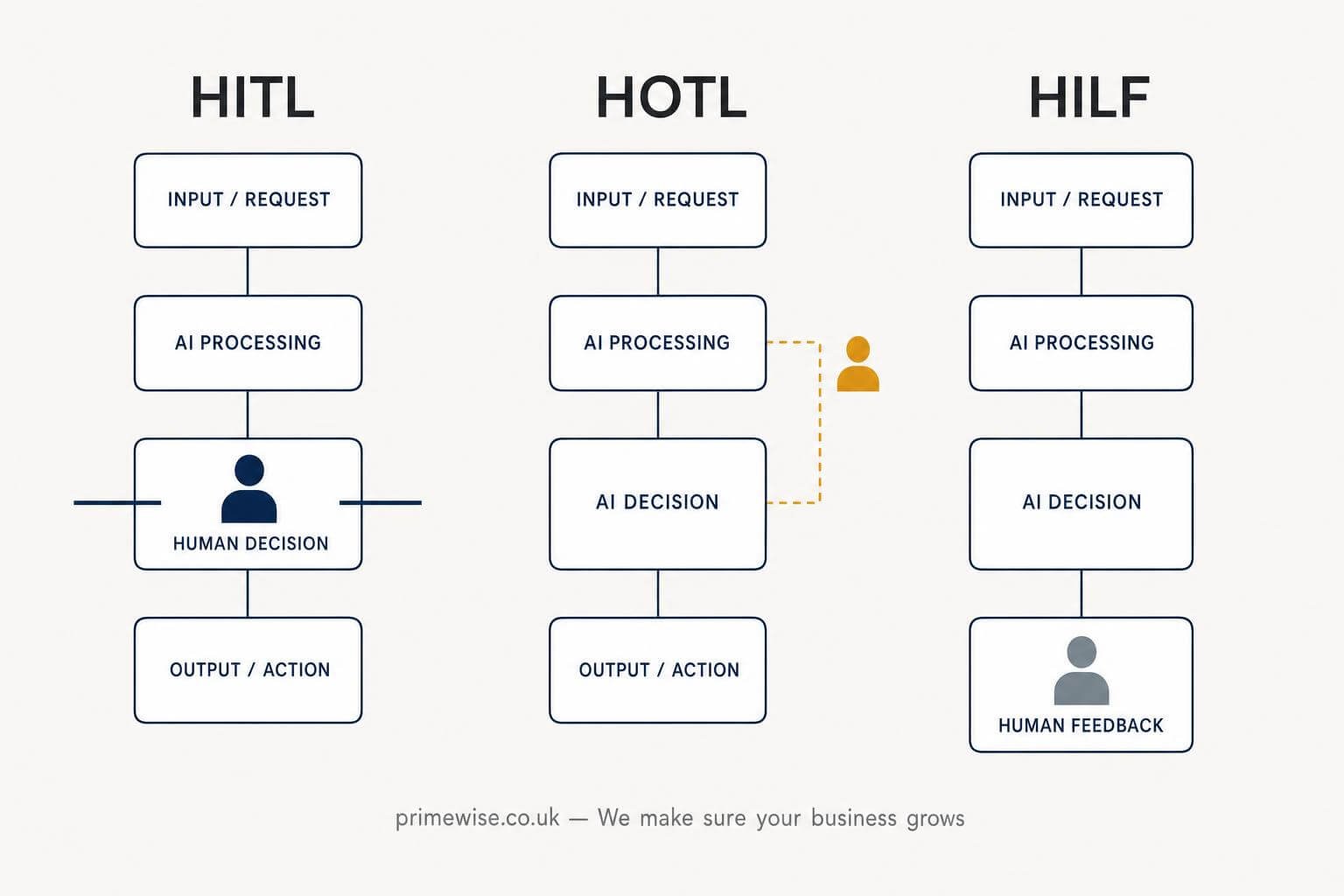
This definition matters because it separates HITL from two adjacent but fundamentally different models: Human-On-The-Loop (HOTL), where a human monitors AI activity in real-time but does not intervene at individual decision points, and Human-In-The-Final-Loop (HILF), where human review occurs only at terminal output stage. For UK financial services firms operating under FCA Consumer Duty obligations and ICO enforcement scope, HITL represents the highest and most defensible standard of human oversight. HOTL and HILF architectures, while lower in operational friction, carry significantly elevated regulatory exposure for material consumer-affecting decisions.
The UK Regulatory Landscape Driving HITL Adoption
Understanding the regulatory pressure points is not optional background reading it is the strategic foundation for every architectural decision you make about AI deployment. UK financial institutions operate within one of the most exacting regulatory environments in the world, and the obligations governing automated decision-making have become substantially more prescriptive since 2023.
UK GDPR Article 22 and Automated Decision Rights
Article 22 of the UK GDPR grants individuals an explicit right not to be subject to decisions based solely on automated processing where those decisions produce legal or similarly significant effects. This applies directly to lead qualification scoring, credit eligibility assessments, insurance risk categorisation, and customer vulnerability classifications all common enterprise AI use cases. The ICO’s 2023 draft guidance on AI and data protection, updated in 2025, clarifies that a nominal human sign-off on a decision that was entirely shaped by algorithmic output does not satisfy the Article 22 requirement. The human involvement must be substantive, informed, and capable of overriding the automated recommendation. A formally structured HITL escalation protocol, with documented confidence threshold logic, is the primary mechanism through which organisations demonstrate this substantive involvement.
FCA Consumer Duty and Algorithmic Harm Prevention
The FCA’s PS24/5 Consumer Duty implementation review findings, published in 2024, established clear obligations on firms deploying algorithmic systems in customer-facing workflows. The duty to prevent foreseeable harm and deliver fair outcomes cannot be delegated to an unsupervised model. The FCA’s supervisory position is unambiguous: firms must be able to demonstrate that their AI systems are subject to meaningful human oversight, that outputs are regularly reviewed against Consumer Duty outcomes, and that escalation pathways exist for vulnerable customer identification. Firms that cannot produce evidence of structured human oversight checkpoints during FCA supervisory visits face enforcement action under the Consumer Duty outcome testing framework.
The EU AI Act’s Cross-Border Implications
Post-Brexit, UK firms with EU operations or EU-domiciled clients are subject to the EU AI Act’s extraterritorial provisions. High-risk AI systems which explicitly include those used in credit scoring, employment decisions, and essential services access require human oversight measures as a mandatory conformity requirement. City of London institutions managing cross-border portfolios must therefore design HITL frameworks that satisfy both ICO expectations and EU AI Act Article 14 human oversight requirements simultaneously, or maintain separate compliant architectures for each jurisdiction.
Architecting the Escalation Trigger Matrix
Moving from regulatory obligation to operational blueprint requires a structured, quantifiable mechanism. The escalation trigger matrix is the central nervous system of any production-grade human in the loop AI automation deployment. It continuously monitors AI agent output across multiple risk dimensions and applies predetermined decisioning rules to halt autonomous execution the moment defined risk parameters are breached.
The matrix does not operate on static binary rules. It evaluates a composite risk signal drawn from algorithmic confidence scores, transaction value bands, regulatory keyword flags, customer vulnerability indicators, and model drift metrics. When the composite signal exceeds a configured threshold in any dimension, the system executes a predefined escalation protocol, routing the decision to the appropriate tier of human reviewer. Designing this matrix correctly at implementation stage eliminates the ambiguity that causes both operational bottlenecks and compliance failures.
Establishing Dynamic Confidence Thresholds
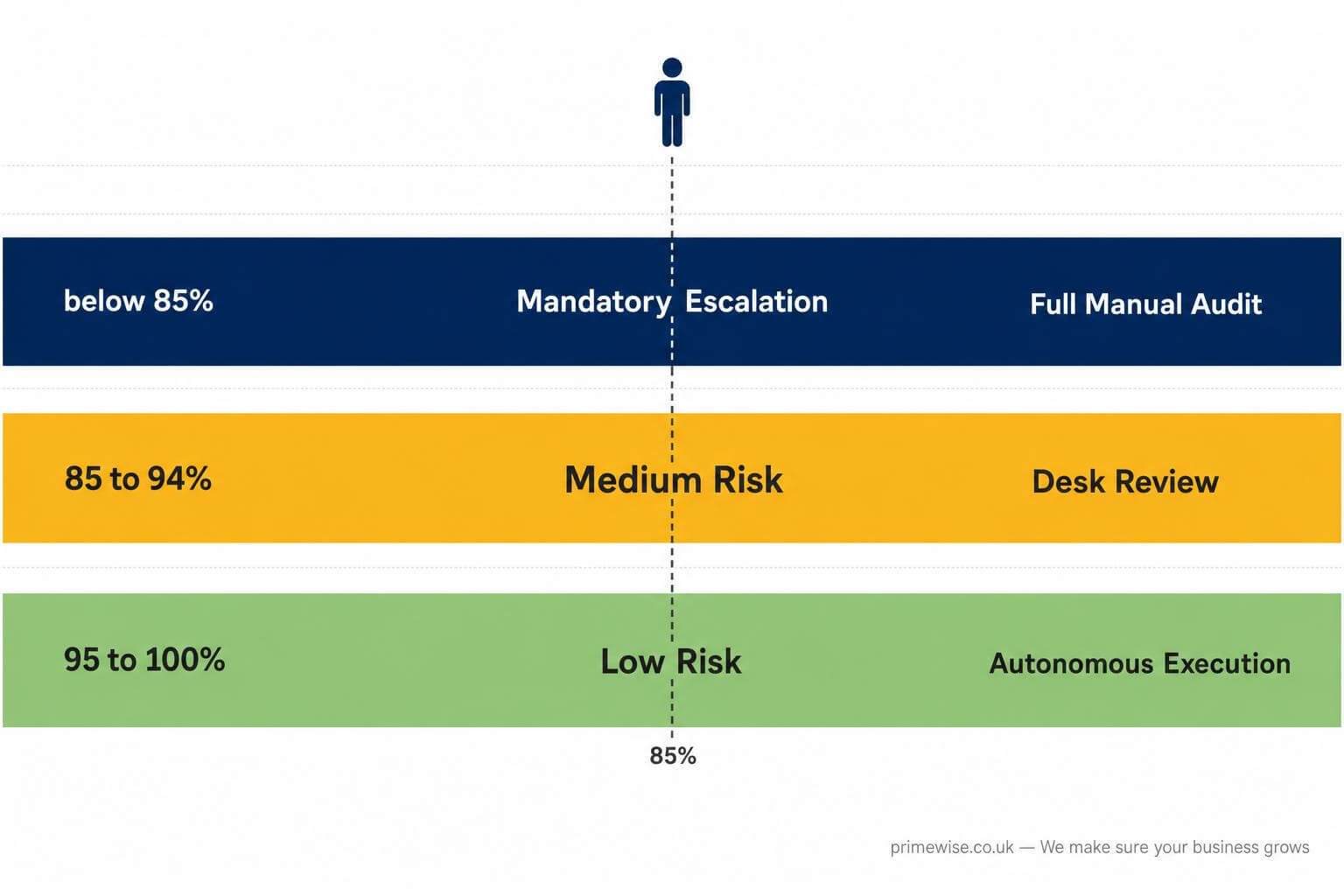
Static confidence cutoffs are insufficient for enterprise environments where data complexity and model performance vary across document types, customer segments, and workflow contexts. Dynamic confidence threshold formulas calculate risk in real-time by combining the raw model confidence score with a contextual risk multiplier. For a contract analysis agent processing standard residential mortgage documentation, an autonomous execution threshold of 92% may be appropriate. For the same agent processing bespoke commercial lending agreements with non-standard clauses, the threshold should be raised to 97% or higher, reflecting the elevated consequence of misclassification. If confidence falls below 85% in any context, the system must categorically reject autonomous routing and trigger an immediate human review, preventing downstream execution errors from propagating through dependent workflows.
Confidence score calibration is a technical discipline in its own right. Raw model confidence outputs are frequently overconfident, particularly in large language models used for document classification. Calibration techniques including Platt scaling and isotonic regression correct for this systematic bias, producing probability estimates that accurately reflect empirical accuracy rates. Deploying uncalibrated confidence scores as escalation triggers in a regulated environment is equivalent to using a miscalibrated instrument in an audited process the numbers will look plausible but the outcomes will be unreliable.
The Escalation Logic Matrix in Practice
The following framework illustrates how composite risk scoring translates into operational action across the three primary risk tiers relevant to UK financial services AI deployments. This matrix should be treated as a configurable baseline, not a fixed template, and must be calibrated against your organisation’s specific regulatory permissions, workflow architecture, and risk appetite statement.
| Confidence Score Band | Contextual Risk Multiplier | Composite Risk Profile | Automated Agent Action | Human Intervention Protocol |
|---|---|---|---|---|
| 95 to 100% | Standard context | Low Risk | Execute autonomously with logging | Periodic batch review only |
| 85 to 94% | Standard or elevated context | Medium Risk | Pause execution and flag specific variables | Standard desk review within SLA window |
| Below 85% | Any context | High Risk | Isolate data, suspend workflow, alert compliance queue | Full manual audit and senior approval required |
| Any score | Vulnerability or regulatory keyword detected | Mandatory Escalation | Immediate suspension regardless of confidence | Specialist review with Consumer Duty documentation |
IMPLEMENTATION INSIGHTModel drift is one of the most underestimated risks in production AI deployments. A model that was 97% accurate at deployment may degrade to 84% accuracy within six months as input data distributions shift. Integrating automated drift detection into your escalation matrix using AI observability platforms such as Arize AI, Fiddler AI, or WhyLabs ensures that confidence thresholds dynamically adjust to reflect actual current model performance rather than historical benchmark figures.
HITL Governance Frameworks and Standards
Deploying an escalation matrix without grounding it within a recognised governance framework leaves the implementation architecturally sound but institutionally indefensible. UK financial institutions require their AI governance posture to be mappable to externally recognised standards that risk committees, external auditors, and regulators can independently validate.
ISO 42001, ratified in December 2023 as the world’s first internationally recognised AI management systems standard, provides the structural framework through which HITL policies, escalation protocols, and confidence threshold methodologies are documented, audited, and continuously improved. FCA-supervised firms are increasingly adopting ISO 42001 certification as the evidence base for their supervisory submissions on algorithmic governance. The NIST AI Risk Management Framework, while a US-origin standard, has been adopted by several City of London institutions as a complementary risk mapping tool alongside ISO 42001, particularly for cross-border operations where alignment with US counterparty expectations is commercially necessary. The DRCF’s AI and Digital Regulation Service roadmap, published as part of the UK Government’s pro-innovation AI regulation white paper, establishes the multi-agency oversight landscape within which these standards operate and firms that can demonstrate ISO 42001 alignment have materially stronger positioning during multi-regulator enquiries.
Scoped Agent Blueprints in Production
Theoretical frameworks demonstrate intellectual rigour. Production deployments demonstrate operational credibility. The following architectural examples illustrate how scoped human in the loop AI automation translates from governance documentation into measurable business outcomes within UK enterprise environments.
High-Stakes Financial Document Processing
Processing complex unstructured data from financial documents, including mortgage applications, KYC dossiers, and commercial lending packages demands a precision that general-purpose automation cannot deliver without structured oversight. A production-grade document processing agent combines optical character recognition with a fine-tuned large language model to extract, classify, and validate data points at scale. Human oversight checkpoints are strategically enforced at three stages: initial document quality assessment, edge-case flagging for handwritten annotations or non-standard legal clauses, and final data reconciliation before system-of-record ingestion. Firms working with PrimeWise have implemented this confidence threshold architecture within regulated document workflows, achieving a measurable reduction in manual escalation overhead while maintaining a 0% regulatory failure rate through strategic human oversight checkpoints a direct result of calibrated escalation logic rather than blanket automation.
Intelligent Customer Support Triage
High-volume customer support operations in financial services face a dual obligation: operational efficiency and Consumer Duty compliance. An AI triage agent processes incoming queries across email, web chat, and telephony transcripts, applying natural language classification to categorise intent, assess sentiment polarity, and identify Consumer Duty vulnerability signals including expressions of financial distress, cognitive impairment references, or complaint escalation language. Queries classified as low-risk and low-sentiment-volatility are resolved autonomously within defined response templates. Queries triggering vulnerability keywords, high negative sentiment scores, or complaint regulatory flags are suspended immediately and routed to senior human operators with full context annotation. This architecture reliably resolves 60 to 70% of incoming volume autonomously while ensuring that every high-stakes interaction receives the substantive human review that Consumer Duty obligations require.
Automated Compliance Monitoring with Human Escalation
Compliance monitoring agents continuously parse internal communications, transaction records, and client correspondence for regulatory keyword signals flagging potential market abuse indicators, suspicious transaction patterns, or policy breach language. The critical design requirement is that these agents never make a final compliance determination autonomously. Their function is evidence surfacing and prioritisation. Every flagged item is routed to a named compliance officer with a structured evidence summary, confidence score, and recommended regulatory reference. The human officer reviews, makes the material determination, and records the decision with a timestamp in the immutable audit trail. Designing enterprise AI governance frameworks that map this exact workflow to FCA supervisory expectations is a core specialisation of the PrimeWise enterprise AI team, ensuring that compliance monitoring deployments are both operationally effective and institutionally defensible.
Building the Internal Business Case for HITL Investment
Securing executive sponsorship and risk committee approval for HITL architecture investment requires translating governance concepts into financial and operational metrics. The McKinsey State of AI 2024 report indicates that organisations with formalised AI governance frameworks report 37% lower AI-related operational incident rates and 28% faster incident recovery times compared to unstructured deployments. The Deloitte UK Financial Services AI Adoption Report identifies regulatory compliance confidence as the single largest barrier to AI scaling in UK financial institutions, meaning that a credible HITL framework is not merely a cost of compliance but an active enabler of AI investment velocity.
The ROI calculation methodology for risk committees should model three dimensions simultaneously. First, avoided cost: quantify the potential regulatory fine exposure eliminated by documented HITL compliance, using the FCA’s published penalty framework as the basis. Second, operational efficiency: calculate the reduction in human review hours achieved by correctly configuring confidence thresholds so that only genuinely ambiguous cases escalate, rather than over-escalating to manage uncertainty. Third, velocity uplift: measure the increase in automated throughput achieved in the green-zone confidence band, converting processing time saved into revenue-enabling capacity. Designing a bespoke escalation logic matrix for your specific regulatory environment requires mapping your existing workflow architecture against FCA supervisory expectations which is precisely what the enterprise AI governance team at PrimeWise specialises in.
STRATEGIC INSIGHTA common implementation error is configuring confidence thresholds too conservatively at launch, resulting in 70 to 80% of all transactions escalating to human review. This eliminates the efficiency rationale for AI deployment and creates reviewer fatigue, which paradoxically reduces the quality of human oversight on genuinely high-risk cases. Threshold calibration must be an iterative, data-driven process reviewed monthly for the first six months of production operation.
Immutable Audit Trails and Risk Governance
The evidentiary standard required to satisfy FCA supervisory visits and internal risk committees in 2026 goes significantly beyond basic activity logging. An immutable audit trail in a compliant HITL deployment captures the complete decision lifecycle: the precise data inputs presented to the AI agent, the model’s internal confidence score and classification output, the specific threshold rule that triggered escalation (or the specific rule that authorised autonomous execution), the timestamp and identity of the human reviewer who actioned the escalation, the outcome of that human review, and the downstream action taken as a result. Each record is cryptographically hashed to prevent retrospective modification, creating a chain of evidence that is independently verifiable by external auditors.
This architecture directly satisfies the explainable AI requirements referenced in FCA supervisory expectations, which demand that firms can explain, in plain language, why a specific automated decision was made or escalated. It also provides the operational substrate for Consumer Duty outcome testing allowing compliance teams to retrospectively analyse whether AI-assisted decisions systematically disadvantaged particular customer segments, a key obligation under the FCA’s fair value assessment framework.
The Three-Stage HITL Maturity Model
Enterprise AI governance does not reach optimal configuration at initial deployment. Organisations that achieve sustainable competitive advantage from human in the loop AI automation do so through a structured maturity progression that systematically expands autonomous execution as confidence in model performance and governance infrastructure is established.
Stage one is assisted automation, where AI agents surface recommendations and evidence summaries but humans make every material decision. This stage prioritises trust-building, data quality validation, and escalation protocol testing. It is the appropriate starting point for any regulated UK financial institution deploying AI in customer-affecting workflows for the first time. Stage two is supervised automation, where AI agents execute decisions autonomously within the high-confidence band while a human supervisor monitors real-time dashboards and retains one-click intervention capability. Model performance is reviewed against defined KPIs monthly, and confidence thresholds are recalibrated based on production accuracy data. Stage three is optimised autonomous execution with structured human oversight, where the vast majority of standard-case processing is automated within proven confidence parameters, human intervention is reserved for genuinely novel or high-risk scenarios, and the governance framework is externally audited annually against ISO 42001 controls. Progression between stages requires formal risk committee sign-off, documented evidence of model stability, and a regulatory impact assessment confirming that the expanded autonomy level remains within FCA and ICO compliance boundaries.
CONVERSION PATHWAYIf your organisation is evaluating an HITL implementation roadmap ahead of your next internal risk committee review or FCA supervisory meeting, PrimeWise offers a structured AI Governance Readiness Assessment designed specifically for UK financial institutions. The assessment maps your current workflow architecture against FCA Consumer Duty obligations, UK GDPR Article 22 requirements, and ISO 42001 governance controls, delivering a prioritised implementation roadmap within two weeks.
Key Terminology Glossary
The following definitions provide precise, regulation-aware meanings for the core technical terms used throughout this framework. These are intended for internal stakeholder communications, risk committee documentation, and regulatory submission glossaries.
- Human-in-the-Loop (HITL): A governance architecture where AI agents pause and mandate substantive human review at predefined decision points before execution of material outputs.
- Human-On-The-Loop (HOTL): A monitoring architecture where humans observe AI activity in real-time without intervening at individual decision points generally insufficient for UK GDPR Article 22 compliance in high-impact decision workflows.
- Human-In-The-Final-Loop (HILF): A governance model where human review occurs only at the terminal output stage; it carries elevated regulatory exposure for consumer-affecting decisions.
- Confidence Threshold: A quantitative benchmark representing the minimum probability score an AI agent must produce before autonomous execution is permitted without human review.
- Escalation Trigger Matrix: A structured rule set that evaluates composite risk signals from AI agent outputs and executes predefined escalation protocols when defined thresholds are breached.
- Model Drift: The progressive degradation of AI model accuracy over time as input data distributions diverge from those used during training, requiring continuous monitoring and threshold recalibration.
- Platt Scaling: A statistical calibration technique applied to model confidence outputs to correct systematic overconfidence and produce empirically accurate probability estimates.
- Immutable Audit Trail: A cryptographically secured, unalterable record of AI decision events and human intervention actions, constituting the primary evidentiary artefact for regulatory and legal proceedings.
- ISO 42001: The international standard for AI management systems, ratified in December 2023, provides the governance framework against which FCA-supervised firms document and audit their AI oversight controls.
- Agentic AI: A class of AI systems capable of autonomous multi-step task execution and decision-making within defined operational boundaries, representing the dominant enterprise deployment paradigm in 2025 and 2026.