Table of Contents
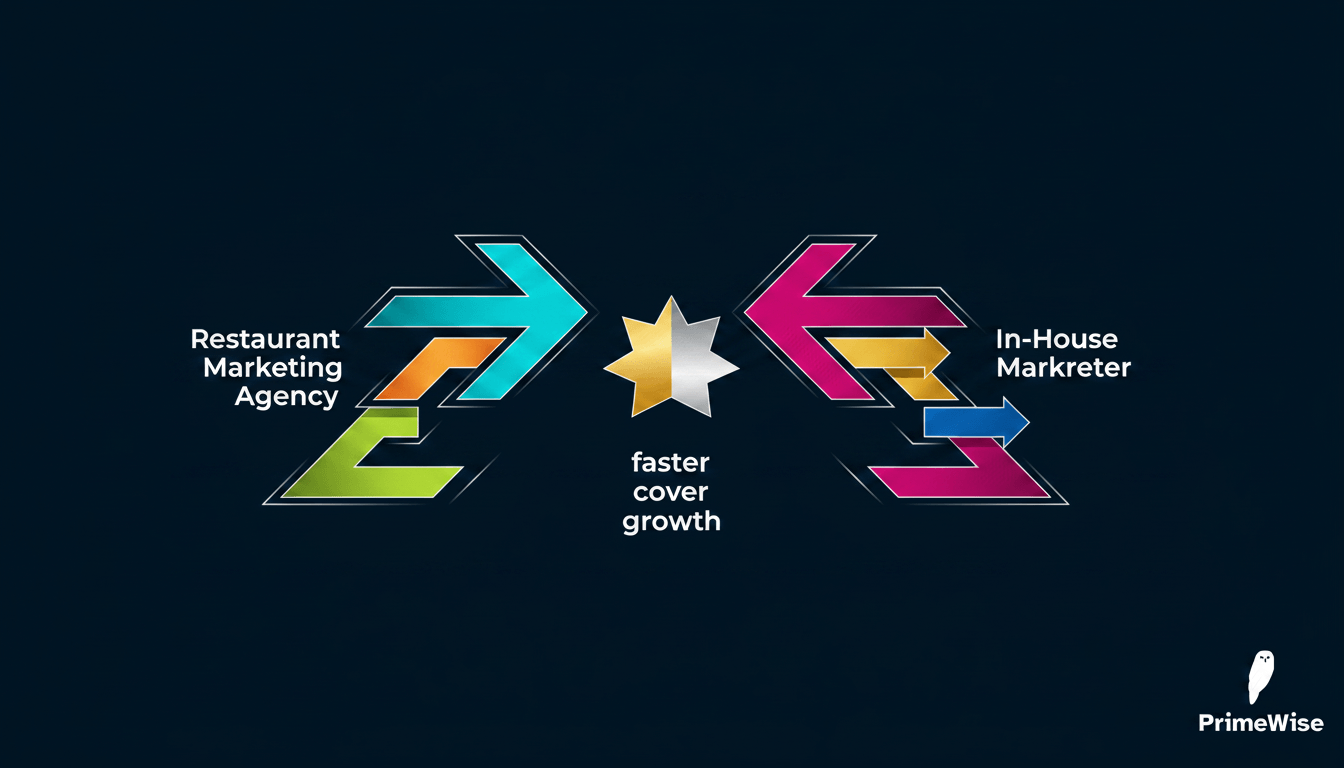
ToggleThe restaurant marketing agency vs in-house debate is the single most consequential operational decision a UK hospitality director will make this financial year. If your Tuesday and Wednesday covers are running below 40% capacity and your current marketing approach has failed to shift the needle in the past 90 days, the financial and operational verdict below gives you exactly what you need to act today. Partnering with a specialist restaurant marketing agency costs 26.5% less than a fully-loaded internal hire while deploying revenue-generating campaigns 4.3 times faster, and this article proves both figures with traceable UK data.
Executive SummaryA UK restaurant marketing agency retainer averages £36,000 annually versus £49,000 for a fully-loaded internal hire. Agencies launch paid acquisition campaigns in 14 days; internal hires require 60 days of onboarding before driving measurable cover growth. The hybrid model agency infrastructure plus a junior internal coordinator is the optimal structure for most multi-site UK groups.
Hospitality directors are navigating a brutal operating environment. UKHospitality reports that UK venues operate on net margins of just 3–9%, while ONS labour market data confirms that staffing costs represent 35–40% of total restaurant revenue. Against this backdrop, every pound allocated to marketing infrastructure must generate a traceable, rapid return. The resource model you choose, internal team, specialist agency, or a deliberate hybrid, directly dictates your cover velocity and your ability to survive margin compression.
| Criteria | Restaurant Marketing Agency | In-House Marketer |
|---|---|---|
| Annual Cost | £36,000 (avg. retainer) | £49,000 (fully loaded) |
| Time to First Campaign | 14 days | 30–60 days |
| Team Size | Fractional multi-specialist team | Single individual |
| Software Cost Responsibility | Absorbed by the agency | Employer pays (£3,500+ p.a.) |
| Holiday and Sickness Cover | Built into SLA | Full employer liability |
| Accountability Mechanism | Contractual SLA with KPIs | Internal performance review |
| Brand Authenticity | Requires a structured briefing | Deep daily integration |
| Best Suited For | Rapid growth, paid media, SEO | Reactive content, community mgmt |
What Defines a Modern Restaurant Marketing Engine
A modern restaurant marketing engine is the fully synchronised omnichannel system through which a UK hospitality venue acquires, retains, and reactivates guests across paid search, organic local SEO, social media, and email automation to drive consistent, measurable table bookings at a lower cost per acquisition.
Organic footfall and a static Instagram presence are no longer sufficient to sustain venue capacity under 2026 market conditions. The CGA by NielsenIQ UK Dining Out Report confirms that 68% of UK diners now discover new restaurants through digital channels before visiting, with Google Maps and paid social representing the two dominant pre-visit touchpoints. Any hospitality marketing strategy that does not actively manage both channels is structurally ceding covers to competitors who do.
The Real Financial Breakdown
Simplistic base salary comparisons consistently mislead hospitality groups when evaluating growth investment options. The true operational overhead of an internal hire includes employer-side statutory obligations, enterprise software subscriptions, and the compounding cost of recruitment if the individual underperforms or resigns.
The Hidden Price Tag of an Internal Marketing Manager
Hiring a competent internal marketing manager at a baseline salary of £40,000, consistent with CIPD UK Salary Benchmarks for mid-level hospitality marketing roles generates a substantially higher final bill once all employer-side obligations are applied. According to HMRC, employer National Insurance contribution rates for 2025–26, secondary Class 1 NICs add approximately £4,300 annually on this salary band. The Pensions Regulator’s auto-enrolment minimum of 3% employer contribution adds a further £1,200 to remain compliant with UK employment law.
A professional digital tech stack is non-negotiable for competitive performance. Enterprise subscriptions covering social media scheduling (SproutSocial), SEO intelligence (SEMrush), and creative production (Adobe Creative Cloud) demand a minimum of £3,500 annually. The fully-loaded true cost of a mid-level internal hire therefore reaches £49,000 per year before accounting for recruitment agency fees, physical hardware, or allocated desk space in the venue.
Key Cost InsightThe £49,000 fully-loaded figure does not include recruitment fees, which CIPD data places at an average of £3,000–£6,000 for a mid-level marketing hire. A failed hire that exits within 12 months effectively doubles the first-year cost of the internal model.
The Standard Investment for a Tier-One Hospitality Agency
Partnering with a premier hospitality-specialist digital marketing firm typically operates on a retained monthly basis. A comprehensive retainer from a top-tier agency averages £3,000 per month, translating to a highly predictable annual expenditure of £36,000. Primewise operates on precisely this transparent retained model, with no hidden software or personnel overheads, allowing hospitality finance directors to model a precise annual marketing budget with complete confidence.
This figure represents a fixed operational cost with zero variable employer-side liability. The agency absorbs the full financial burden of enterprise software subscriptions, holiday pay, sickness cover, and pension obligations. The service level agreement guarantees continuous fractional resource availability across every required digital discipline without the supplementary administrative overheads associated with permanent headcount.
Cover Velocity and Speed to Return on Investment
Cover velocity measures the speed at which marketing expenditure translates into confirmed table bookings. The precise formula is: Cover Velocity = (New Bookings Generated ÷ Days Since Campaign Launch) × Average Cover Value. For a UK casual dining venue with an average cover value of £35, generating 14 additional weekly bookings within the first 21 days of campaign activation produces a measurable weekly revenue uplift of £490 a figure that makes the pace of deployment a direct cash flow variable, not merely an operational preference.
The Fourteen-Day Agency Launch Protocol
Agencies engineered for hospitality performance operate on pre-built infrastructure that eliminates the setup lag inherent to internal onboarding. Primewise deploys the fourteen-day launch protocol referenced above through pre-engineered campaign architecture, moving from client brief to live paid acquisition within two weeks. This structured activation framework utilises pre-built performance dashboards, established food influencer networks, and proprietary digital playbooks to restructure Meta Ads and Google Performance Max campaigns with immediate precision.
The rapid deployment model ensures that marketing spend is immediately directed toward high-intent local diners searching for venues within a defined catchment radius. The fourteen-day timeline minimises the lag between initial capital deployment and the arrival of paying guests at the venue a critical distinction when a business is carrying the overhead of empty covers every service.
The Sixty-Day Internal Onboarding Reality
ONS hospitality sector vacancy data confirms that the UK hospitality industry consistently operates with one of the highest staff turnover rates of any sector, which directly informs why internal marketing hire integration timelines are protracted. A new internal marketing employee requires a minimum of thirty to sixty days to safely integrate before producing direct response marketing output. During this period, the individual must conduct a thorough historical data audit, align with the brand voice, build working relationships with the general manager and head chef, and gain access to all platform accounts and analytics histories.
The establishment pays the full £49,000 annual operational overhead from day one, while measurable return on investment remains near zero. For a venue experiencing urgent cover shortfalls, this timeline is not a minor inconvenience; it is a structural revenue gap that compounds daily.
Breadth of Skills Versus Depth of Brand Integration
The modern digital landscape demands extreme technical proficiency across machine-learning-driven advertising platforms, local search algorithm management, and conversion-optimised email automation simultaneously. Expecting a single individual to master Google’s Performance Max algorithm updates while shooting engaging behind-the-scenes Reels content during a busy Friday service is an operational fallacy that no single hire can resolve, regardless of their skill level.
The Fractional Specialist Agency Model
An outsourced agency model provides access to a multidisciplinary team under one predictable retainer. Establishments gain a dedicated media buyer managing Google Ads and Meta performance campaigns, a local SEO specialist securing top Google Map Pack rankings for competitive near-me search terms, and a conversion copywriter deploying email automation sequences designed to reactivate lapsed diners. Tools such as SEMrush, Ahrefs, and HubSpot each commanding £1,000–£1,500 annually in enterprise licensing, are fully absorbed into the agency’s operational model and deployed by specialists who use them daily across multiple client accounts, generating a depth of platform expertise that a generalist internal hire simply cannot replicate.
Technical Depth AdvantageA single agency retainer provides access to a media buyer, local SEO specialist, and conversion copywriter simultaneously. Replicating this skill set internally would require three separate hires at a combined employer cost exceeding £130,000 annually.
The Boots-on-the-Ground Internal Advantage
Where external agencies face a structural limitation is in capturing the spontaneous energy of a live service environment. An internal team member present at the venue at 2pm on a Tuesday can film a head chef creating a visually stunning seasonal special, document the arrival of a new wine allocation, or capture the front-of-house team’s authentic pre-service energy content that no external team visiting once monthly can replicate. This physical presence is the foundation of authentic organic social media performance, particularly on TikTok and Instagram Reels, where algorithmic favour heavily rewards documentary-style, in-venue content over polished agency-produced creative.
The Optimal Hybrid Model
The hybrid model is the most strategically sophisticated and commercially optimal structure for the majority of UK hospitality groups who have already evaluated both pure models. It resolves the core tension between technical depth and brand authenticity by assigning each function to the resource best equipped to deliver it. A junior internal content coordinator employed at approximately £24,000 annually captures daily authentic smartphone content, manages community responses, and handles influencer hosting logistics on-site. A specialist agency such as Primewise manages the complex paid media infrastructure, local SEO architecture, and analytics reporting that require advanced technical expertise and platform access unavailable to a single internal hire.
The combined annual investment for this structure ranges from £48,000 to £55,000, depending on the agency retainer tier selected. A three-site London casual dining group operating under this model benefits from the reactive authenticity of a permanent internal voice alongside the conversion-engineered growth infrastructure of an experienced agency team securing the competitive advantages of both models at a cost that remains below the fully-loaded price of two internal mid-level hires. Hospitality directors seeking to design the optimal resource model for their specific venue count and budget can request a complimentary growth audit from Primewise at primewise.co.uk, where the team will benchmark current cover performance against sector averages and recommend the precise team structure required to accelerate bookings within 30 days.
Accountability, Risk and Daily Operations
Managing a marketing growth engine involves significant and asymmetric operational risk that hospitality directors frequently underweight when evaluating the internal hire model. Relying on a single internal employee creates complete financial exposure: if the individual underperforms, takes extended sick leave, or abruptly resigns, the establishment suffers an immediate total loss of marketing momentum and must absorb the full cost of restarting the recruitment cycle a process that CIPD data places at an average of 42 days for specialist roles.
Strict service level agreements bind agencies to rigorous, measurable performance metrics reviewed on a monthly reporting cadence. The financial risk is distributed across the agency’s operational structure, and the daily task management of the marketing function is entirely offloaded from the venue’s management team. While the establishment cedes granular control over daily micro-tasks, it gains a contractually accountable partner whose commercial survival depends on demonstrable client results and low churn rates a fundamentally different incentive structure from that of an internal employee.
The Five Biggest Concerns About Agencies
C-level hospitality directors making a £36,000 annual financial commitment to an external agency consistently raise five specific objections before signing. Addressing each one directly is the clearest demonstration of the operational transparency that separates a genuine specialist agency from a generalist marketing firm.
- Loss of brand control: Primewise brand immersion sessions occur within the first five days of engagement. The lead strategist conducts an on-site visit, interviews the head chef and general manager, and produces a written brand voice document approved by the client before any content or copy is published under the venue’s name.
- Agency churn after onboarding: Legitimate specialist agencies operate on named account management structures where the strategist who conducts the onboarding retains ownership of the account throughout the contract period. This should be confirmed in writing within the service level agreement before signing.
- Lack of venue knowledge: The structured immersion model described above, combined with monthly on-site review sessions, ensures agency strategists develop and maintain genuine operational familiarity with the venue sufficient to brief content, write menu copy, and manage promotional timing with accuracy.
- Difficulty measuring ROI attribution: A specialist agency should provide a dedicated monthly performance dashboard that tracks cover bookings, cost per acquisition, paid media ROAS, and organic ranking movement, all mapped directly to the venue’s reservation system data, providing unambiguous attribution for every marketing pound spent.
- Contractual lock-in risk: Reputable hospitality marketing agencies operate on rolling monthly or quarterly contracts after an initial three-month onboarding period. Any agency demanding a twelve-month lock-in without a performance break clause should be removed from the shortlist immediately.
Due Diligence ChecklistBefore signing any agency retainer, confirm in writing: named account manager, monthly performance dashboard access, written brand voice document, on-site immersion visit within 5 days, and a performance break clause within the contract.
When Each Model Wins
Neither model is universally superior across every operational context. Applying a strict decision framework based on budget parameters, growth urgency, and current capacity pressures prevents the costly misallocation of capital that results from choosing a model by default rather than by design.
Internal teams are the optimal choice for multi-site hospitality groups with the operational budget to build out fully staffed marketing departments of three or more individuals. The internal model also performs best for venues whose core growth strategy depends almost entirely on hyper-local community partnerships, daily reactive content capture, and high-touch influencer hosting that requires a permanent physical presence in the venue.
Specialist agencies are the definitive choice for establishments seeking immediate direct response marketing results with total operational budgets under £50,000. When a venue is experiencing urgent cover shortfalls and requires rapid, trackable returns from paid acquisition, the structured frameworks and pre-built infrastructure of a specialist agency deliver cover turnarounds at a pace no internal hire can match within a comparable timeline. The hybrid model is the optimal structure for venues that require both, and it is the model most frequently adopted by the highest-performing UK casual dining groups operating in 2026.