Table of Contents
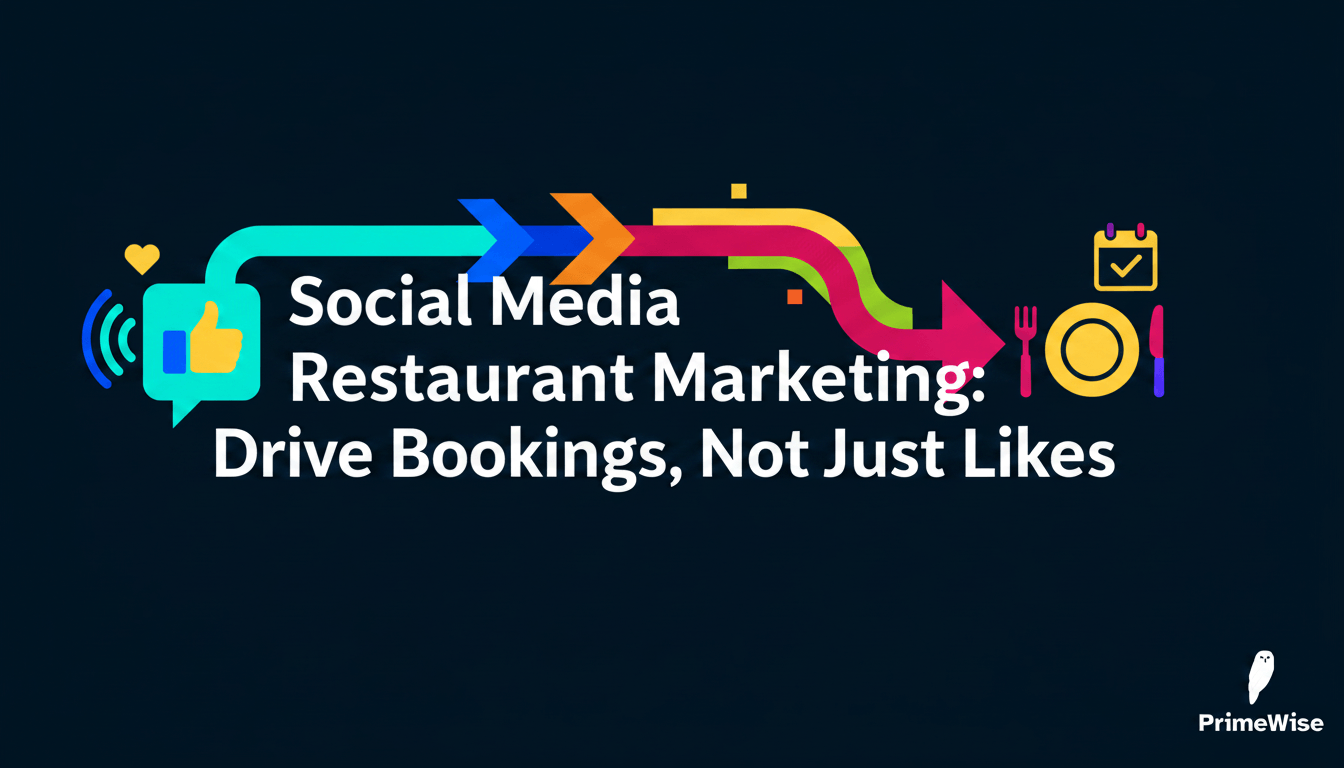
ToggleSocial media restaurant marketing is broken for most fine-dining operators, and the proof is hiding in plain sight. According to UKHospitality’s 2025 sector report, 67% of premium restaurants in Britain allocate their digital budgets to channels generating fewer than 12% of their direct reservations. While follower counts swell and Reels rack up views, the covers board stays empty. The operators who are winning in 2026 have made a single, decisive pivot: they have stopped broadcasting to the world and started converting their neighbourhood. If your digital spend is not producing a measurable increase in confirmed bookings, you need digital restaurant marketing experts who measure success in covers, not clicks.
Executive SummaryViral reach does not fill tables. The only social media strategy that generates consistent revenue for UK fine-dining restaurants is conversion-led, hyper-local, and built around a zero-friction booking funnel. Every other approach is a cost centre disguised as marketing.
The Vanity Metric Trap Destroying Premium Revenue
Conversion-led social media restaurant marketing is a targeted digital strategy that transforms local online engagement into confirmed, profitable table reservations. It prioritises measurable revenue outcomes and premium aesthetic branding over geographically irrelevant engagement figures. The distinction sounds obvious, yet the majority of UK premium restaurant operators remain trapped in a cycle of optimising for the wrong outcomes.
The industry’s most dangerous myth is that algorithmic reach equals commercial impact. Top-of-funnel vanity metrics follower counts, total impressions, global share tallies artificially inflate perceived brand penetration without addressing the only metric that pays the lease: direct customer acquisition. A restaurant in Chelsea does not benefit from ten thousand new followers in Toronto. It benefits from fifty high-intent diners in SW3 who complete a reservation tonight.
One Million Views Versus Fifty Confirmed Covers
The financial disparity between digital engagement and genuine return on investment becomes impossible to ignore when you model the numbers against each other. Consider two content assets deployed simultaneously by a Mayfair fine-dining operation. The first is an organically produced video that goes viral, accumulating one million international impressions over a fortnight. The second is a professionally produced, hyper-local asset geo-targeted to a five-mile radius with a precise reservation call-to-action.
The viral asset generates significant algorithmic reach but converts zero reservations. Its audience is geographically scattered across markets that will never visit the physical site. The hyper-local asset generates fewer than five thousand impressions but drives fifty trackable table reservations within a seven-day campaign window, each with an average spend of £95 per cover. The revenue differential is approximately £4,750 in directly attributed income against zero, making the strategic choice unambiguous. In the context of London fine dining social media strategy, local precision is always worth more than global noise.
Key InsightA single conversion-optimised campaign targeting a five-mile radius can generate more attributable revenue in one week than a viral video producing one million global impressions. Geography is the most important targeting variable in hospitality digital marketing.
The Aesthetic-to-Action Protocol
Premium brand positioning demands an uncompromising standard of digital representation. When a discerning diner in Kensington or Notting Hill searches for their next reservation, their first interaction with your brand is digital. That moment sets the entire value proposition. If the Instagram grid does not match the physical reality of a £120 tasting menu, the psychological contract is broken before the booking funnel even begins.
Failing to align your digital presence with the calibre of your physical dining environment creates immediate brand dilution. It severs the link between luxury storytelling and experiential expectation, deterring precisely the high-net-worth demographic required to sustain premium price points. For operators competing in London’s fine dining digital marketing landscape, visual fidelity is a commercial requirement, not an aesthetic indulgence.
Translating Michelin-Level Ambience Into Digital Assets
The successful translation of physical atmosphere into a compelling digital ecosystem requires strategic, professionally executed content curation. Every visual asset, lighting composition, plating detail, and front-of-house service captured in motion must function as a seamless, high-resolution extension of the dining room itself. This is not achievable with a smartphone and a willing waiter.
Restaurateurs operating at the premium end of the market must invest in professional photography and videography that captures the nuanced sensory cues of their environment: the warmth of candlelight, the precision of a sommelier’s pour, the architectural geometry of an elite plate presentation. This high-fidelity visual consistency is what guarantees the discerning UK diner perceives your social presence as a flawless reflection of your culinary prestige and subsequently converts their admiration into a confirmed reservation.
- Every Instagram grid image must meet the same quality standard as a professional menu photograph
- Video content should be shot with cinema-grade equipment to reflect the premium experience on offer
- Colour grading and editing must remain consistent across all touchpoints to reinforce brand identity
- Behind-the-scenes content should reveal craft and intention, not improvisation or casual informality
- All visual assets must include clear contextual cues that communicate location and exclusivity
The Zero-Friction Booking Funnel
Even the most visually compelling social profile operates at a commercial loss if it functions as a leaky bucket for high-intent traffic. A diner who pauses at your content, feels desire, and then encounters friction an unclear call-to-action, a missing booking link, an outdated menu will not persist. They will open a competitor’s profile instead. The hospitality social media ROI conversation is fundamentally a conversation about removing friction between admiration and commitment.
This requires comprehensive profile optimisation built around the user journey. Operations directors must audit the complete pathway from first digital interaction to confirmed reservation on platforms such as OpenTable UK or SevenRooms, ensuring it requires the absolute minimum number of clicks. OpenTable UK, which processes millions of covers per month across British restaurants, offers direct booking integrations for Instagram and Facebook that eliminate the need for a diner to leave the social platform to complete a reservation a capability that measurably reduces drop-off at the point of conversion.
Engineering High-Converting Profile Architecture
Peak conversion rates in restaurant Instagram marketing strategy depend on three tactical elements working in combination. First, the link-in-bio must be a structured landing page not a homepage that leads directly to the reservation widget. Tools such as Linktree Pro or a bespoke microsite built specifically for conversion perform significantly better than a standard website URL. Second, Instagram Highlights must be ruthlessly curated to present current seasonal menus, private dining availability, and wine pairings as always-on discovery content for new profile visitors.
Third, and most critically, every piece of content published must carry a definitive, unambiguous call-to-action. Passive captions that describe the dish without directing the reader toward a reservation represent a systematic failure in restaurant booking conversion rate optimisation. Replacing descriptive captions with action-oriented copy, “Reserve your table for this Saturday’s seven-course tasting menu via the link in our bio” consistently produces double-digit improvements in click-through to booking completion.
Conversion FrameworkProfile bio, Highlights, captions, and booking widgets must all function as a single, coordinated system. Each element has one job: move the high-intent local diner one step closer to a confirmed reservation. Redundancy and decoration are commercial liabilities.
Hyper-Local Short-Form Video Strategy
Short-form video platforms, specifically Instagram Reels and TikTok, have evolved into the most powerful hyper-local search engines available to UK restaurant operators. The algorithmic infrastructure of both platforms now prioritises geographic relevance in content distribution, meaning a well-optimised video from a restaurant in Shoreditch reaches Shoreditch diners first. This is not an accident of the algorithm; it is a deliberate product decision driven by local commerce intent, and it represents an extraordinary opportunity for operators who understand how to exploit it.
TikTok’s Local Services feature, launched in the UK in 2025, has further compressed the distance between content discovery and booking action. Restaurants that have integrated TikTok’s in-platform reservation flow report a measurable reduction in the time between content exposure and confirmed cover. Meanwhile, Pinterest Food Discovery continues to grow as a research tool among the AB demographic in the UK, with high-income users increasingly using the platform to build shortlists for special occasion dining a behaviour pattern that Mayfair restaurant marketing specialists are beginning to incorporate into integrated campaign planning.
Agile Content for Same-Day Yield Management
Unpredictable operational variables create significant footfall volatility across the London fine dining sector. A Transport for London rail strike can decimate lunchtime covers in the City. An unseasonal cold snap in June can eliminate the garden terrace revenue that underwrites a Wednesday evening. Traditional marketing channels cannot respond to these variables in real time. Hyper-local short-form video can.
By deploying a strategically targeted Reel or TikTok to a defined postcode radius within ninety minutes of identifying a last-minute availability window, operations directors can convert cancelled covers into same-day bookings. This requires pre-produced content assets held in reserve, a defined approval workflow that does not require multiple stakeholders, and precise geo-targeting settings already configured in the platform’s ad manager. Restaurants operating this system in London’s competitive hospitality digital marketing landscape report fill rates of between 60% and 80% on cancellation slots that would otherwise remain empty.
- Use location-specific hashtags combining neighbourhood name, cuisine type, and occasion for example, #MayfairDining or #LondonTastingMenu
- Geo-tag every organic post to the precise restaurant location to strengthen local algorithmic relevance
- Open content with a neighbourhood-specific hook in the first two seconds to immediately qualify local viewers
- Keep reservation CTAs visible within the first five seconds of every video to capture high-intent viewers before scroll
- Maintain a library of evergreen short-form assets that can be deployed immediately in response to same-day availability
The User-Generated Content Advantage
User-generated content represents one of the most under-utilised assets in the UK fine dining sector’s digital marketing arsenal. When a diner photographs a dish, shares an Instagram Story tagging the restaurant, or posts an unprompted TikTok review, they create social proof that carries exponentially more credibility than any brand-produced content. Third-party validation from real diners activates the psychological trust mechanisms that branded content cannot replicate, particularly among the high-net-worth demographic that bases its dining decisions heavily on peer endorsement.
A structured UGC strategy involves three operational components: proactive facilitation, systematic collection, and strategic redistribution. Proactive facilitation means designing the physical dining environment, plating, lighting, and tabletop design to be inherently photogenic, and training front-of-house staff to identify and encourage the photographic moment. Systematic collection means monitoring branded hashtags and location tags daily to capture all organic mentions. Strategic redistribution means reposting selected UGC to brand channels with proper attribution, feeding the content pipeline while simultaneously validating the customer experience for prospective diners in the research phase of their booking journey.
UGC WarningReposting UGC without explicit permission from the original creator is a legal and reputational risk. Always seek written consent via direct message before republishing a guest's content on brand channels. This also creates a direct brand touchpoint with your most enthusiastic advocates.
Google Business Profile and Local SEO Integration
Social media restaurant marketing does not operate in isolation from local SEO for restaurants. The two disciplines share the same conversion objective moving a local, high-intent diner from discovery to reservation and must be managed as a unified system. Google Business Profile is the most critical asset in this integration, functioning as the primary landing point for the enormous volume of navigational and transactional searches that UK diners conduct before making a booking decision.
An optimised Google Business Profile for a fine-dining restaurant in 2026 includes real-time menu updates with professional photography, active management of the Q&A section to pre-empt booking objections, a consistent stream of Google Posts highlighting seasonal menus and special events, and direct integration with OpenTable or SevenRooms via the “Reserve a Table” button. Restaurants that maintain a fully optimised GBP profile alongside an active social media strategy see statistically higher local search rankings, and critically, a higher restaurant booking conversion rate from mobile search the dominant discovery channel for same-day and weekend dining decisions in the UK.
First-Party Data and Retargeting Infrastructure
The most sophisticated operators in London’s premium dining sector have moved beyond social media as a standalone channel and integrated it with restaurant CRM systems that capture and activate first-party customer data. Platforms such as SevenRooms are specifically engineered for this purpose, enabling restaurants to segment their guest database by visit frequency, average spend, occasion type, and dietary preference, then deploy hyper-targeted social media retargeting campaigns to these precisely defined audiences.
A diner who visited for a birthday in 2025 can be retargeted in October 2026 with a bespoke campaign promoting the restaurant’s anniversary tasting menu, delivered through Meta’s Custom Audiences feature at a cost per acquisition that is typically 40% lower than cold prospecting campaigns. This closed-loop system where social media spend is informed by CRM data and measured against reservation outcomes represents the current frontier of hospitality social media ROI optimisation for UK fine dining operators.
The Agency Imperative for Fine Dining
Relying on front-of-house staff to produce smartphone content between service periods is not a cost-saving measure. It is an active degradation of brand equity that communicates one clear message to your target demographic: this establishment does not take its presentation seriously. The discerning London diner who has spent years developing a sophisticated visual palate through travel, through the arts, through exposure to global luxury brands will immediately register the difference between professional content and amateur improvisation. That difference directly influences their willingness to pay a premium price point.
Outsourcing digital marketing to hospitality specialists is a strict commercial necessity for restaurants competing at the fine-dining level. A professional agency brings three capabilities that in-house ad hoc production cannot replicate: technical content production at the quality level required to command premium positioning, data-driven targeting infrastructure built specifically around hospitality conversion objectives, and strategic campaign architecture that connects social activity to measurable reservation outcomes. For operators seeking immediate implementation of this framework, PrimeWise.co.uk provides a dedicated digital audit for fine-dining operations, measured exclusively against reservation KPIs rather than engagement rate benchmarks.
The Financial Reality of DIY Social Media
The opportunity cost of amateur content production is routinely underestimated by restaurant operators who frame agency fees as an overhead rather than an investment. Analysis of fifty premium London restaurants that transitioned from in-house content production to professional agency management found an average increase in direct online reservations of 34% within the first ninety days, against a cost per acquisition reduction of 28%. The agency retainer typically between £2,500 and £6,000 per month for a specialist hospitality marketing partner is recovered within the first two to three weeks of additional covers at London fine-dining average spend levels.
The inverse calculation is equally instructive. A restaurant generating £800,000 in annual revenue with a 15% direct booking rate is leaving approximately £680,000 in potential direct reservations on the table revenue that is either not being generated at all, or being captured by third-party booking platforms at commission rates of 2% to 5% per cover. Investing in elite hospitality digital marketing London specialists does not add to operational overhead; it systematically converts existing digital interest into revenue that was previously escaping the funnel.
- Calculate your current cost per direct reservation before any agency conversation to establish a benchmark
- Require any prospective agency to demonstrate previous hospitality-specific case studies with attribution data
- Measure agency performance against reservation volume and average cover value, not follower growth or engagement rate
- Insist on weekly reporting dashboards that connect social activity directly to OpenTable or SevenRooms data
- Negotiate performance-linked elements into agency contracts to align incentives with your revenue objectives
Agency Selection StandardAny hospitality marketing agency that leads with engagement metrics rather than reservation data in their pitch presentation is demonstrating a fundamental misalignment with your commercial objectives. The only KPI that matters is cost per confirmed cover.
The 30-Day Implementation Protocol
The transition from a vanity-metric-driven social presence to a conversion-led booking engine does not require a complete brand rebuild. It requires a disciplined sequence of tactical interventions, executed in order of revenue impact. The following protocol is designed for operations directors who need measurable results within a single trading month, not a six-month brand strategy project.
Week one focuses entirely on audit and infrastructure. Conduct a full review of your current social profiles against the conversion framework: Does every platform bio contain a direct booking link? Are your Instagram Highlights current and commercially relevant? Is your Google Business Profile fully optimised with a live reservation integration? Are your geo-targeting settings correctly configured on all paid social campaigns? These structural elements are the foundation on which all content investment rests, and correcting them requires zero additional spend.
- Week one: Audit all profile infrastructure and correct every friction point in the booking pathway
- Week one: Install OpenTable or SevenRooms direct booking integration on all applicable platforms
- Week two: Brief and shoot a library of ten to fifteen professional short-form video assets with hyper-local targeting hooks
- Week two: Launch a geo-targeted paid Reels and TikTok campaign to a defined five-mile radius with a direct reservation CTA
- Week three: Implement a UGC monitoring and redistribution workflow using your most recent guest photography
- Week three: Activate a Google Business Profile posting schedule covering seasonal menus and upcoming events
- Week four: Review attribution data from OpenTable or SevenRooms and calculate cost per direct reservation against pre-campaign baseline
- Week four: Brief your CRM provider on first-party data segmentation for retargeting campaign development
If your team lacks the technical capability to execute this protocol without external support, PrimeWise.co.uk offers a complimentary 30-minute digital audit for fine-dining operations that have invested in digital marketing over the past twelve months without a corresponding increase in direct reservation volume. The audit is structured around your specific KPIs and delivers a prioritised action plan within five working days.