Table of Contents
ToggleAI for restaurant marketing is no longer a luxury reserved for large chains it is the operational backbone that independent UK operators urgently need. Unpredictable footfall, severe post-Brexit staff shortages, and razor-thin margins are collectively crippling the British hospitality sector. Establishments that partner with a dedicated 360 restaurant marketing agency to deploy AI-driven CRM technology are systematically outperforming competitors who rely on outdated, manual marketing methods. This guide is the definitive resource for understanding how to combine WiFi captive portals with intelligent CRM systems to create a hands-free, predictable table-fill engine that converts anonymous walk-ins into high-value, trackable regulars.
Executive SummaryAn AI restaurant CRM captures first-party guest data through WiFi captive portals, builds intelligent behavioural profiles, and automates hyper-targeted campaigns to fill empty tables during slow periods all without manual staff intervention. For UK operators facing labour shortages and soaring costs, this technology directly solves the most pressing commercial challenges of 2025 and beyond.
According to the Zonal UK Hospitality Report 2024, 68% of British restaurants still manage customer relationships through manual processes, leaving an enormous competitive gap for operators willing to embrace automation. The UKHospitality Quarterly Tracker recorded over 1,500 net restaurant closures in the UK across 2024, with poor customer retention cited as a leading contributing factor alongside energy costs and wage pressures. The operators who survived and scaled shared one common attribute: they invested in systems that maximised the lifetime value of every guest who walked through their door.
What Is an AI Restaurant CRM
An AI restaurant CRM is an automated guest management platform that captures visitor data through public WiFi infrastructure, processes that data using machine learning algorithms, and deploys personalised marketing communications at precisely the right moment to drive repeat visits. Unlike traditional spreadsheet-based loyalty schemes or generic email blasts, an AI-powered system builds living, dynamic profiles of individual guests learning their visit frequency, average spend, preferred dining times, and responsiveness to specific offer types. The result is a self-optimising marketing engine that grows smarter with every interaction and delivers measurable return on investment without demanding additional staff hours.
The commercial case is compelling. Research from Deloitte’s UK Hospitality Sector Report indicates that acquiring a new restaurant customer costs between five and seven times more than retaining an existing one. Given that UK restaurants currently operate on net profit margins averaging between 3% and 9%, the financial logic of investing in retention technology over acquisition advertising is irrefutable. Every incremental visit from an existing guest carries a dramatically lower cost base and a significantly higher contribution to bottom-line profitability.
Key InsightRetaining an existing restaurant guest costs up to 7x less than acquiring a new one. In a market where margins average below 9%, AI-driven retention is not optional it is the most efficient use of your marketing budget.
The Predictive Table Fill Loop
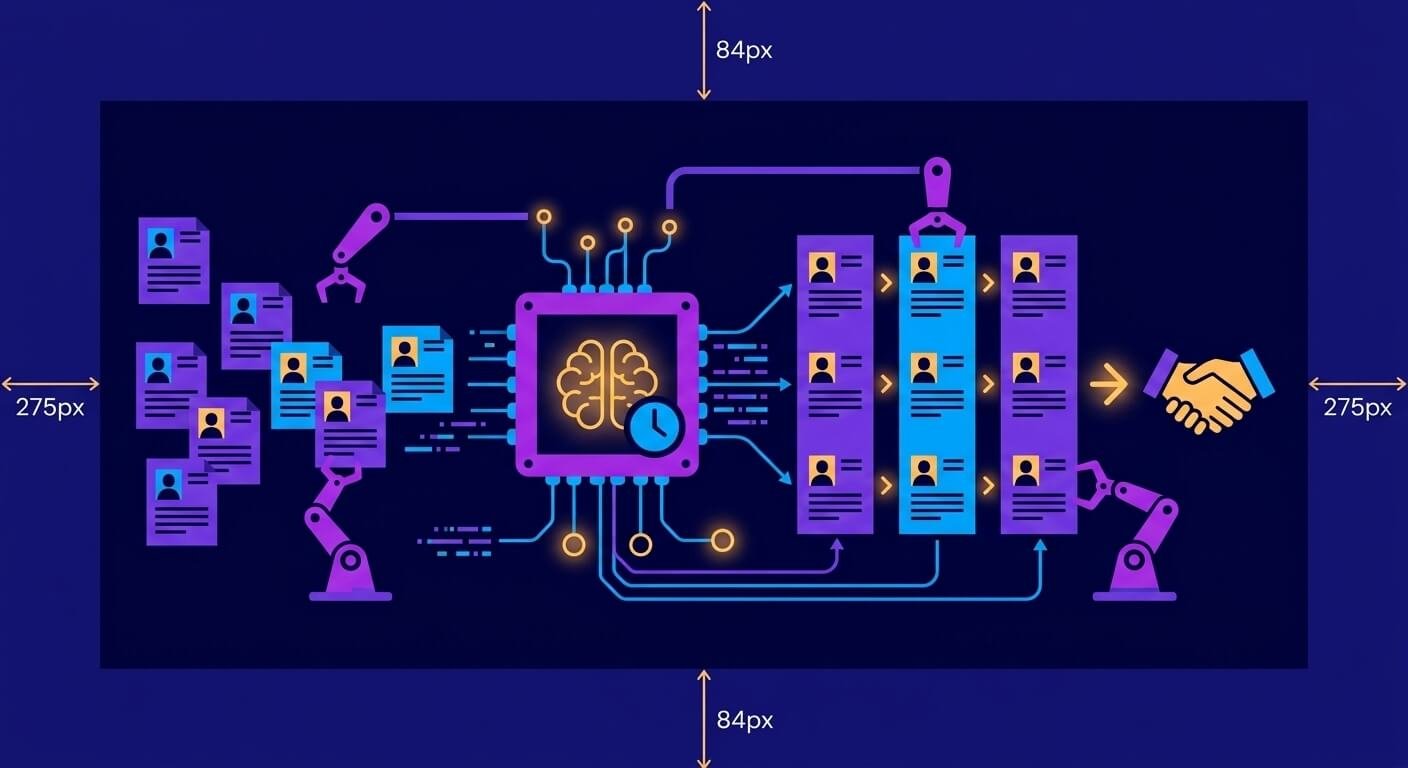
The Predictive Table Fill Loop is a proprietary five-stage framework that maps the complete journey of a guest from anonymous first visit to loyal, high-value regular. Understanding this loop is essential before evaluating any specific technology platform or campaign strategy.
Stage 1 Implicit Data Capture: A guest connects to the restaurant’s WiFi network through a branded captive portal, providing their email address or social login. No awkward data collection by staff is required.
Stage 2 Profile Construction: The CRM immediately begins building a guest profile, logging visit timestamp, dwell time, table location, and device type. Subsequent visits enrich this profile automatically.
Stage 3 Behavioural Segmentation: Machine learning algorithms classify the guest into a behavioural segment weekend brunch regular, corporate weekday diner, occasion-based visitor, or lapsed patron enabling precise targeting.
Stage 4 Automated Campaign Deployment: Triggered communications are sent via email or SMS at optimal send times based on individual engagement history. Offers are dynamically personalised to match the guest’s demonstrated preferences.
Stage 5 Revenue Attribution: Every campaign is tracked back to actual table visits and spend data, providing clear, auditable ROI that justifies continued investment to ownership and investors.
The Three Pillars of Guest Retention Technology
The AI restaurant marketing technology stack, when correctly architected, rests on three interdependent pillars. Each pillar is commercially distinct but operationally inseparable. Removing any one element from the ecosystem reduces the overall system from an autonomous revenue engine to a collection of disconnected tools with limited impact.
WiFi Captive Portal Marketing
Offering complimentary, high-speed guest WiFi is the invisible engine of legally compliant first-party data capture. A captive portal intercepts a user before granting internet access, presenting a branded splash page that requires authentication via an email address, phone number, or social media account. This implicit data capture method is significantly more effective than manual collection industry benchmarks from the Stampede platform indicate that UK hospitality venues using captive portals grow their guest databases at an average rate three to four times faster than those relying on paper sign-up forms or verbal requests from staff.
Beyond raw database growth, captive portals generate behavioural data that is invaluable for segmentation. Dwell time data reveals whether a guest lingered for two hours over a leisurely Sunday lunch or visited for a rapid weekday lunch, informing the type of offer most likely to trigger a return. Visit frequency data identifies your most loyal patrons and flags at-risk customers before they lapse entirely. Critically, when configured correctly by a specialist team, this data capture process adheres fully to UK GDPR requirements under the UK Data Protection Act 2018, with transparent consent mechanisms built into every login flow.
Compliance WarningUK GDPR and PECR regulations govern both email and SMS marketing. Any captive portal data capture mechanism must include explicit, unbundled consent for marketing communications. Failure to comply can result in ICO fines of up to £17.5 million or 4% of global annual turnover whichever is higher.
Dynamic Guest Profiling
Raw data collected through a captive portal holds no commercial value unless it is transformed into actionable intelligence. Dynamic guest profiling is the central nervous system of the AI restaurant CRM ecosystem. Rather than storing guest records in isolated data silos, sophisticated profiling engines continuously synthesise WiFi behavioural data, transactional data from your point-of-sale system, and campaign engagement data into a unified, living guest profile that updates in real time.
Leading platforms in the UK market approach this differently. SevenRooms, which operates across numerous London fine dining establishments, integrates directly with reservation systems and POS platforms including Lightspeed and Square, building profiles that incorporate spend per head, dietary preferences logged by servers, and special occasion history. Yumpingo specialises in real-time guest sentiment analysis, feeding satisfaction scores back into segmentation logic to ensure only highly satisfied guests receive upsell communications. Stampede, built specifically for the UK SME hospitality market, offers an accessible entry point with strong GDPR tooling and direct Mailchimp integration, making it particularly suitable for independent operators. Eagle Eye Solutions provides enterprise-grade loyalty programme infrastructure used by several major UK casual dining groups, with sophisticated multi-location attribution capabilities.
The commercial output of dynamic profiling is meticulous segmentation. Operators gain the ability to distinguish between a guest who visits every Friday evening and spends an average of £65 per head versus an occasional visitor who responds exclusively to promotional offers and to market to each group with entirely different messaging, timing, and incentive structures. This level of precision eliminates wasted marketing spend and dramatically improves campaign conversion rates.
Hyper-Local AI Campaign Automation
The genuine competitive advantage of this technology stack lies in its capacity to react to real-world variables faster than any human marketing team. Hyper-local AI campaign automation deploys targeted communications triggered by external data inputs weather APIs, local events calendars, sports fixture schedules, and even Transport for London disruption alerts combined with internal data signals such as reservation gaps and kitchen capacity.
A practical example illustrates the commercial impact. A weather-based API integration detects a sudden, sustained downpour over Central London on a Tuesday afternoon. The system identifies a 40% below-average booking rate for that evening’s service. Within seconds, it deploys a geo-targeted SMS message to all guests within a one-mile radius of the restaurant who have visited at least twice in the past six months, offering a complimentary glass of house wine with any main course booked before 6pm. The message is personalised by first name, the offer threshold is calibrated to the average spend of the target segment, and the response is tracked back to actual covers sat that evening. No human involvement is required between the weather trigger and the revenue outcome.
Churn prediction is equally powerful. When a guest who previously visited every fortnight has not returned in 45 days, the system automatically escalates their classification from active to at-risk and deploys a win-back sequence typically a personalised email acknowledging their absence, followed by an SMS with a time-limited offer if the email generates no response within 72 hours. According to internal benchmarks from operators using this framework, automated win-back sequences recover between 18% and 27% of at-risk guests who would otherwise have been permanently lost.
Solving the UK Hospitality Crisis Through Automation
The structural pressures facing UK restaurant operators in 2025 are without modern precedent. The increase in the National Living Wage to £12.21 per hour from April 2025 added an estimated £2,500 to £4,000 in annual wage costs per full-time front-of-house employee. Combined with commercial lease renewals in London where prime locations are seeing rent increases of 15% to 22% above 2022 benchmarks, the financial environment demands that every marketing pound delivers measurable, attributable return.
Automating Past Labour Shortages
Post-Brexit restrictions on EU labour mobility removed an estimated 14% of the UK hospitality workforce between 2021 and 2024, according to UKHospitality’s workforce analysis. Front-of-house teams are overstretched, and adding manual marketing tasks collecting email addresses, distributing loyalty cards, manually segmenting databases to their responsibilities is operationally untenable. An AI-driven CRM functions as a tireless, 24-hour digital marketing department that requires no management oversight once configured correctly.
Staff are entirely freed from data collection duties. Every guest who connects to the WiFi network is automatically enrolled in the data capture and nurture ecosystem. Every lapsed guest is automatically targeted with a win-back sequence. Every successful campaign is automatically reported with revenue attribution data. The front-of-house team’s sole focus remains delivering the in-room hospitality experience that no technology can replicate and that focus is a direct commercial differentiator in a market where service quality is increasingly what separates profitable operators from those that close.
Operational InsightUK restaurants that automated their CRM and guest communications reported a 23% average reduction in marketing administration time for managers, according to Stampede platform data. That time is redirected to training, service quality, and menu development.
Maximising Revenue Per Square Foot
Commercial rents in London’s premium hospitality districts Soho, Mayfair, Shoreditch, and King’s Cross have never exerted greater pressure on operators. The only sustainable response is to maximise the revenue generated by every square foot of restaurant space during every service period. Increasing Customer Lifetime Value through AI-driven retention is the highest-leverage mechanism available to achieve this without increasing headcount or extending operating hours.
Customer Lifetime Value can be calculated using a straightforward formula: multiply the average transaction value by the average number of visits per year, then multiply by the average customer lifespan in years. For a London restaurant where the average spend per head is £48, a guest visits six times per year, and the average relationship lasts three years, the CLV is £864. Increasing visit frequency from six to eight times per year through automated retention campaigns raises that CLV to £1,152 a 33% increase in revenue from the same guest, with near-zero incremental marketing cost once the automation is live.
Comparing the Leading AI CRM Platforms for UK Restaurants
Selecting the right technology platform requires honest assessment of capability, cost, and UK-specific compliance readiness. The table below provides a functional comparison of the four most relevant platforms currently active in the British hospitality market. Each platform has distinct strengths and optimal use cases, and the descriptions that follow the table provide essential context that no summary table can fully capture.
| Platform | Monthly Cost (Est.) | UK GDPR Tooling | POS Integration | Best For |
|---|---|---|---|---|
| SevenRooms | £300 £800+ | Strong | Lightspeed, Square, Resy | Fine dining, multi-site groups |
| Yumpingo | £200 £500+ | Strong | Multiple UK POS | Guest sentiment and feedback loops |
| Stampede | £69 £250 | Excellent (UK-built) | Mailchimp, Hubspot | Independent UK SME operators |
| Eagle Eye | Enterprise pricing | Enterprise-grade | Full enterprise stack | Casual dining groups and franchises |
SevenRooms has established itself as the premium choice for London’s fine dining sector, with notable deployments across Michelin-recognised establishments. Its guest profile depth is unmatched servers can access a guest’s full dining history, dietary restrictions, wine preferences, and special occasion log directly from a tablet at tableside, enabling service personalisation that meaningfully increases average spend per visit and drives organic word-of-mouth referrals.
Stampede deserves particular attention for independent UK operators because it was designed from the ground up within the British regulatory environment. Its GDPR consent flows are pre-configured and ICO-aligned, removing significant compliance risk from operators who lack in-house legal resource. Its price point makes enterprise-grade WiFi marketing accessible to single-site restaurants and small groups for the first time, and its onboarding process is structured specifically for operators without dedicated marketing teams.
Why DIY Integration Fails UK Restaurants
The appeal of assembling a bespoke technology stack from individual off-the-shelf tools is understandable it appears to offer cost savings and flexibility. In practice, the technical and legal complexity of connecting WiFi hardware, captive portal software, CRM databases, POS systems, email service providers, and SMS gateways into a seamlessly functioning ecosystem exceeds the operational capacity of virtually every independent restaurant operator.
API Integration and Compliance Risks
Each integration point between software platforms is a potential failure node. A misconfigured API between the captive portal and the CRM can result in guest data being captured but never transferred, rendering the entire data collection effort commercially worthless. More seriously, errors in consent data handling such as marketing messages being sent to guests who explicitly opted out at the WiFi login stage constitute violations of both UK GDPR and the Privacy and Electronic Communications Regulations (PECR). The Information Commissioner’s Office has significantly increased enforcement activity since 2023, and fines for systemic consent failures can reach £17.5 million or 4% of global annual turnover under the UK GDPR framework. These are not theoretical risks they are documented outcomes for businesses that prioritise speed over architectural rigour.
It is worth acknowledging that a DIY approach may be temporarily viable for a very small single-site operator testing basic email capture with a standalone tool such as Mailchimp connected to a simple web form. However, the moment WiFi hardware, POS integration, or SMS marketing is introduced into the equation, professional architecture becomes non-negotiable from both a technical reliability and legal compliance standpoint.
The Case for a Specialist Agency Partnership
Delegating the architecture, integration, and ongoing optimisation of this ecosystem to a specialist agency removes every layer of technical and legal risk from the operator. The team at Primewise.co.uk has deployed this exact AI-driven CRM framework across multiple restaurant clients in London and Manchester, engineering seamless integrations between WiFi infrastructure, guest profiling platforms, and automated campaign workflows that consistently deliver measurable improvements in guest return rates and Customer Lifetime Value.
A professional agency partnership delivers three outcomes that no internal DIY effort can match: seamless technical integration with zero data loss between platforms, continuous campaign optimisation informed by cross-client performance benchmarks, and rigorous ongoing legal compliance as UK GDPR guidance from the ICO evolves. Restaurateurs who partner with Primewise regain the bandwidth to focus entirely on their genuine competitive advantage the food, the atmosphere, and the human hospitality experience while a fully automated digital marketing engine operates continuously in the background.
Partnership InsightPrimewise.co.uk specialises in architecting AI-driven CRM and WiFi marketing ecosystems for UK restaurant operators. Request a free CRM audit to identify the revenue gaps your current setup is leaving on the table.
Real-World Impact A UK Restaurant Case Study
An independent Italian restaurant in Manchester with 60 covers and a single-site operation implemented the full Predictive Table Fill Loop framework in Q3 2024. Prior to implementation, Monday through Wednesday evening services averaged 34% seat occupancy, and the restaurant had no structured mechanism for encouraging repeat visits beyond a paper loyalty stamp card with a redemption rate below 8%.
Within 90 days of deploying a captive portal WiFi system integrated with a Stampede CRM and an automated email and SMS campaign workflow, the following results were recorded:
- Guest database grew from 340 contacts to 1,847 opted-in contacts.
- Monday to Wednesday evening occupancy increased from 34% to 61% on average.
- Win-back campaigns recovered 22% of guests who had not visited in over 60 days.
- Average Customer Lifetime Value increased by 38% across the active guest database.
- The manager reported saving approximately six hours per week previously spent on manual marketing tasks.
The investment in professional setup and monthly agency management was recovered within the first 47 days of operation through incremental cover revenue alone. This outcome is representative of operators who implement the full integrated stack rather than isolated individual tools.
Zero-Party Data and the Future of Restaurant Marketing
The marketing landscape is evolving beyond first-party data toward what analysts now term zero-party data information that guests proactively and willingly share with a brand in exchange for a clearly articulated benefit. This shift is commercially significant for UK restaurant operators because it represents the highest-quality, most consent-robust form of customer intelligence available.
In a restaurant context, zero-party data collection looks like a WiFi login portal that asks a guest to select their dietary preferences, preferred dining occasion, and birthday month in exchange for complimentary access and a future birthday dining benefit. The guest provides this information deliberately, understanding exactly how it will be used. The restaurant receives actionable segmentation data that would previously have required months of behavioural observation to infer. This approach not only produces superior marketing personalisation but also creates the most legally defensible consent record possible under UK GDPR a critical advantage as ICO enforcement continues to intensify.
Integrating zero-party data collection into the captive portal flow is a natural evolution of the WiFi marketing pillar described earlier in this guide. It represents the strategic direction that the most sophisticated UK hospitality operators are already moving toward, and it is a capability that a specialist agency can implement with minimal operational disruption to existing systems.