
To engage a fractional CMO is one of the highest-leverage commercial decisions a UK founder or board member can make in 2026. The execution gap between strategy and growth is widening for SMEs and scale-ups that cannot justify a full-time C-suite marketing salary but desperately need senior commercial direction. This guide gives you the exact, field-tested methodology used by experienced talent partners to scope, vet, contract, and onboard a fractional Chief Marketing Officer without operational disruption, IR35 exposure, or wasted capital.
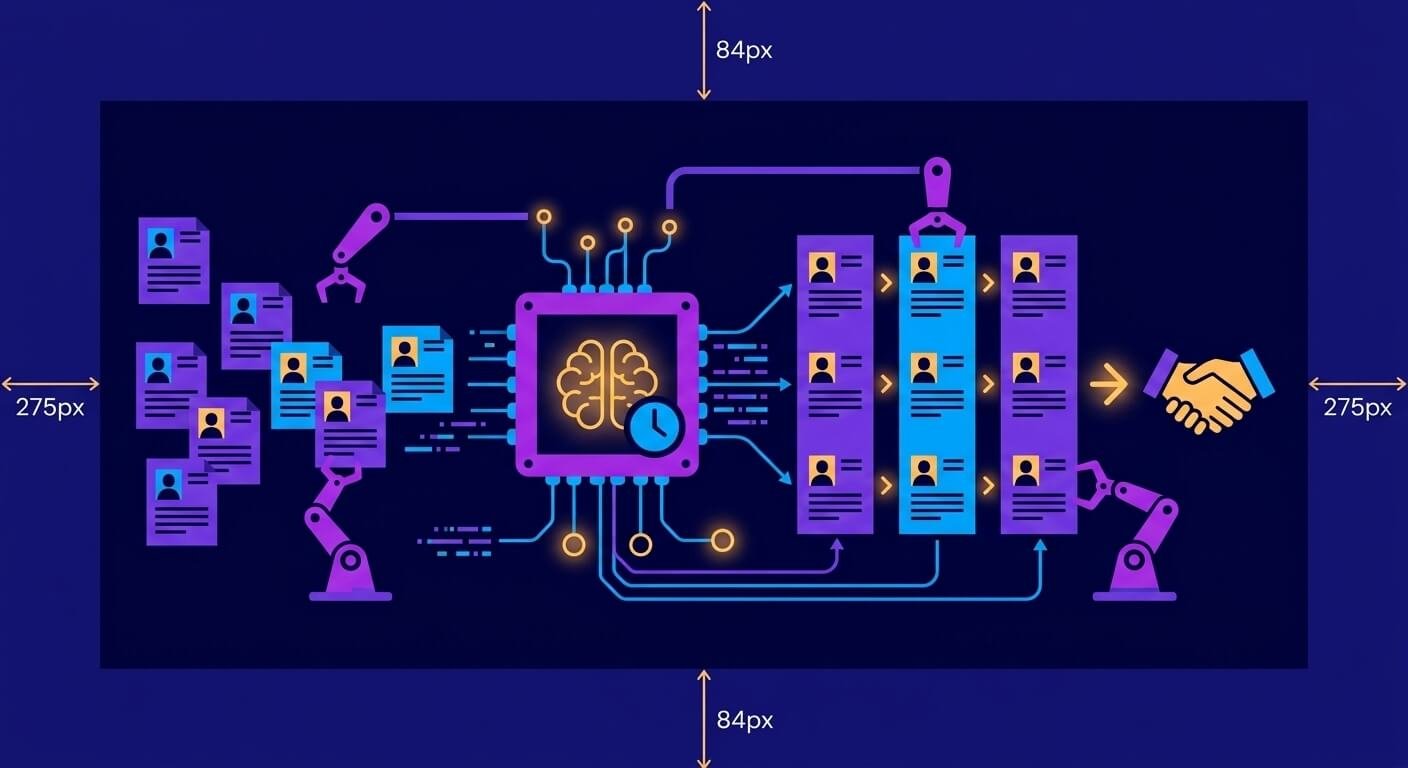
The problem most founders face is not a lack of marketing activity. It is a lack of strategic architecture. Junior marketing managers execute tasks. Tactical agencies optimise channels. Neither party owns the commercial outcome end-to-end. A fractional CMO fills that critical gap, sitting above the execution layer to align every marketing initiative with revenue targets, funding milestones, and investor expectations in a matter of days, not months.
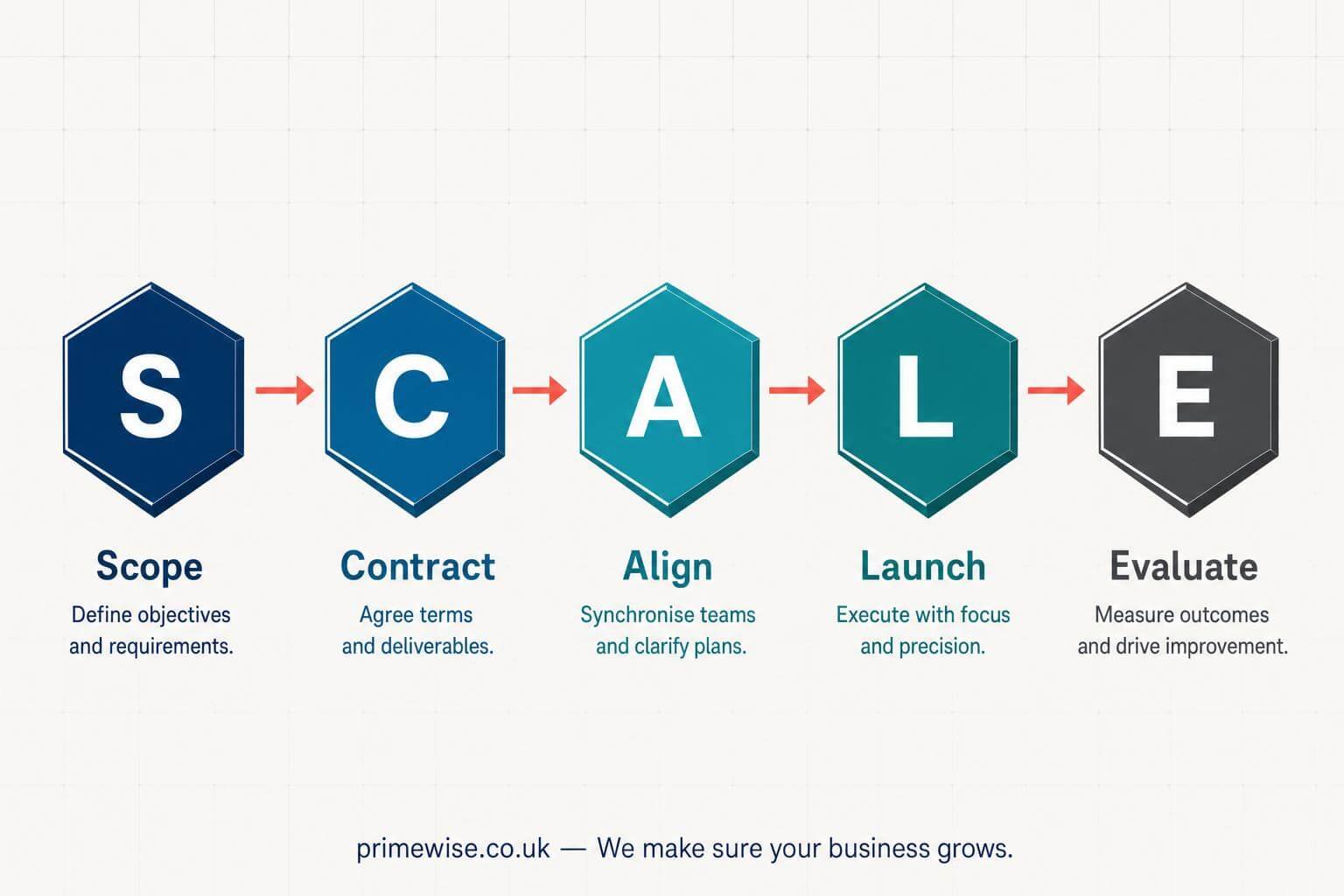
Executive SummaryA fractional CMO delivers C-suite marketing leadership on a part-time basis, typically one to three days per week. UK day rates range from £700 to £1,500+. Engagements can commence within days of contract signature, bypassing the standard three to six month executive notice period. The SCALE model Scope, Contract, Align, Launch, Evaluate is the definitive framework for securing and onboarding this talent safely and profitably.
What Is a Fractional CMO
A fractional Chief Marketing Officer is a senior marketing executive who integrates into your leadership team on a part-time, project-based, or retainer basis to drive commercial strategy, manage teams, and accelerate growth. They are not a consultant who delivers a slide deck and disappears. They sit at the boardroom table, own the marketing function, manage internal staff and external agencies, and are directly accountable for measurable revenue outcomes.
Unlike a full-time hire demanding £150,000 to £250,000 per annum in base salary, equity, and benefits, a fractional executive delivers the same strategic horsepower at a fraction of the total cost. For capital-efficient SMEs and venture-backed scale-ups, this model eliminates the risk of a permanent senior hire during a phase of rapid, often volatile, growth.
The Execution Gap Driving Fractional Demand
Venture capital and private equity investors across the UK are scrutinising capital efficiency at every portfolio review. According to the Chartered Institute of Marketing’s 2024 benchmarking report, the average total compensation package for a full-time CMO in London now exceeds £220,000 when factoring in base salary, bonus, and long-term incentive plans. This financial commitment creates a structural barrier for businesses that need immediate strategic oversight but cannot sustain permanent C-suite overheads on their current runway.
The instinctive alternative engaging a tactical digital agency consistently fails to resolve the problem. Agencies excel within their specific channels, whether that is paid search, SEO, or content production. What they fundamentally cannot provide is the overarching commercial perspective required to align a marketing strategy with a corporate funding narrative. The result is disjointed campaigns, inflated agency retainers, wasted ad spend, and a sales pipeline that stalls precisely when growth pressure is highest. Fractional marketing leadership resolves this by placing a seasoned commercial architect at the centre of the operation.
Market IntelligenceSMEs utilising fractional CMOs report a 40% reduction in strategic planning time and a 30% faster time-to-market compared to traditional agency-led growth models. These figures reflect direct talent placement outcomes observed across the UK fractional executive market in 2024 to 2025.
The SCALE Fractional Integration Model
Deploying senior executive talent into an established business demands a rigorous, repeatable framework. The SCALE model Scope, Contract, Align, Launch, Evaluate is the proprietary methodology used by experienced fractional talent partners to ensure that every placement delivers measurable commercial impact from day one. Each phase addresses a distinct risk in the fractional hiring process, from misaligned expectations to IR35 exposure to onboarding failure.
Scope the Commercial Mandate
Before initiating any executive search, founders must define the precise boundaries of the role. The fundamental distinction to establish is where strategic governance ends and tactical execution begins. A fractional CMO should never be tasked with administrative marketing work. Their mandate must be anchored to high-impact, high-complexity initiatives that directly influence pipeline velocity, revenue per account, or investor readiness.
The scoping phase involves three core diagnostics. First, identify the primary commercial gap is this a go-to-market architecture problem, a demand generation failure, or a brand positioning weakness ahead of a funding round? Second, audit existing internal marketing resources to determine what the fractional leader will manage versus what they will build from scratch. Third, define the precise outcomes expected within the first ninety days, the first six months, and the full engagement term. Vague mandates produce vague results. Precision at this stage is the single most important determinant of a successful placement.
Contract with Precision and Compliance
Structuring the commercial agreement requires acute attention to both UK market economics and legal compliance. HMRC’s off-payroll working rules commonly referred to as IR35 present a material risk to any business engaging senior contractors without rigorous contract architecture. Under Chapter 10 ITEPA 2003, for engagements with medium and large UK businesses, the IR35 determination responsibility sits with the client organisation, not the contractor. This is a critical point that is frequently misunderstood and commercially dangerous when ignored.
Contracts must clearly articulate project-based deliverables, include a genuine right of substitution, remove all employment-characteristic benefits, and establish mutually agreed termination clauses. Before finalising any arrangement, PrimeWise strongly recommends engaging a specialist IR35 employment law firm and using HMRC’s Check Employment Status for Tax tool, available at gov.uk, to validate the status determination. Failing to do so exposes the business to substantial tax liabilities and reputational risk with HMRC.
| Engagement Model | Typical UK Day Rate | IR35 Position |
|---|---|---|
| Advisory Retainer | £700 to £1,200 | High likelihood outside IR35 if correctly structured with clear project deliverables and substitution rights |
| Embedded Leadership | £1,200 to £1,500+ | Requires rigorous contract drafting; determination rests with the client for medium and large businesses |
Beyond compliance, contracts should be designed to align the fractional executive’s incentives with your long-term enterprise value. Including performance-linked bonuses, revenue-share arrangements, or modest equity options creates genuine commercial alignment. A fractional CMO who participates in the upside of your growth is a fundamentally different strategic partner to one operating on a flat day rate alone.
IR35 WarningFor medium and large UK businesses, the legal responsibility for determining IR35 status falls on the client, not the contractor. Engage a specialist employment law firm and use HMRC's Check Employment Status for Tax tool before signing any fractional executive contract. Non-compliance carries significant tax penalties and interest charges.
Align Through Rigorous Vetting
Evaluating senior marketing talent goes far beyond reviewing an impressive career history. The alignment phase requires a structured vetting scorecard that assesses behavioural competencies, commercial velocity, and cultural fit with your leadership team. A candidate who has scaled a B2C consumer brand is not automatically equipped to architect a B2B demand generation engine ahead of a Series B raise. Context specificity is everything at this level.
The following criteria must be assessed for every shortlisted candidate.
- Quantified evidence of customer acquisition cost reduction across comparable business models
- Demonstrated ability to integrate with and manage cross-functional sales and product teams
- Verifiable experience preparing commercial narratives for investor funding rounds
- Proficiency in deploying capital-efficient marketing technology stacks including GA4, Consent Mode v2, and first-party data infrastructure
- Track record of managing and rationalising external agency relationships
- Experience with modern attribution methodologies including media mix modelling and incrementality testing
Reference checking at this level must be treated as a strategic intelligence exercise, not a formality. Speak directly with previous founders, investment directors, and peer executives who worked alongside the candidate. Ask specifically about their pace of impact how many weeks did it take to move from diagnosis to decisive action? Ask about their weaknesses under pressure and how they handled strategic conflict with existing leadership. These conversations surface the information that a polished interview process never will.
Launch the First Ninety Day Plan
Integration velocity is the defining metric of any fractional placement. The highest risk period is the first four weeks, when the incoming executive is absorbing institutional knowledge while the business is measuring early signals of confidence and capability. The first ninety day execution plan must be documented and agreed before the commencement date. It is not something to construct on arrival.
Month one should focus on a comprehensive audit of existing marketing infrastructure, budget allocation, and channel performance. This includes a full review of GA4 event tracking configuration, Consent Mode v2 compliance status, CRM data integrity, and agency contract terms. Rapid onboarding ensures the executive transitions from structured observation to decisive commercial action within the first fortnight.
Month two is the realignment phase. Budget reallocation decisions are made, redundant agency relationships are terminated or restructured, and the go-to-market architecture is redesigned around validated demand signals. Cross-functional workshops with the sales and product leadership are conducted to ensure marketing initiatives are directly tied to revenue pipeline metrics.
Month three delivers the first measurable commercial outcomes. Qualified pipeline contribution, cost per acquisition trends, and demand generation programme performance are all reviewed against the targets established in the scoping phase. This creates the evidence base for evaluating whether to extend, expand, or redefine the engagement terms.
Evaluate Against Quantifiable KPIs
Holding a senior part-time executive accountable demands a robust quantitative framework that is established before the engagement begins, not retrospectively applied after ninety days of activity. Vanity metrics such as social media impressions, website sessions, and email open rates are commercially irrelevant at this level. Executive KPIs must be anchored in financial outcomes.
- Pipeline velocity measured as the rate at which qualified opportunities progress through the sales cycle
- Customer acquisition cost trajectory compared against the pre-engagement baseline
- Customer lifetime value optimisation initiatives and their measurable impact on revenue per account
- Return on marketing investment calculated across all active channels and programmes
- Marketing-sourced revenue as a percentage of total new business closed
- Investor-ready commercial narrative quality assessed against Series A or Series B fundraising readiness criteria
These KPIs should be reviewed in a structured monthly commercial meeting attended by the CEO or CFO alongside the fractional CMO. Quarterly business reviews provide the formal opportunity to assess overall engagement health and determine whether the commercial mandate requires adjustment as the business evolves.
Bypassing the UK Executive Talent Bottleneck
The standard notice period for a permanent C-suite executive in the United Kingdom spans three to six months. For a venture-backed scale-up in a critical growth phase, enduring a six-month talent vacuum is commercially untenable. Delayed strategic leadership during a funding preparation window or a market entry sprint can represent millions of pounds in lost commercial momentum.
Fractional executives operate on portfolio models, maintaining the agility to commence a new engagement within days of contract signature. This structural advantage is one of the most underappreciated benefits of the fractional model. There is no recruitment firm search cycle, no lengthy notice negotiation, and no multi-month onboarding ramp. A vetted fractional CMO can be attending your leadership team meeting within a fortnight of the initial brief. For high-growth businesses where timing is a genuine competitive advantage, this agility is transformative.
Case Study 140% Pipeline Growth in 90 Days
The following is a composite anonymised case study drawn from fractional CMO placements within the UK B2B scale-up market. A London-based software-as-a-service business encountered a severe growth plateau following their Series A funding round. Despite deploying significant capital across three separate digital agencies, their lead generation programmes consistently produced low-quality prospects. This created persistent friction between the sales and marketing leadership, eroding internal trust and stalling pipeline progression.
Within fourteen days of a fractional CMO engagement commencing, the executive completed a full commercial audit, identified two redundant agency retainers consuming £18,000 per month with no attributable pipeline contribution, and restructured the entire go-to-market strategy around an account-based marketing programme targeting a defined set of two hundred and fifty ideal customer profile accounts. By day ninety, qualified pipeline had increased by one hundred and forty percent against the pre-engagement baseline. The redeployed agency budget funded a first-party data capture programme that reduced customer acquisition cost by thirty-two percent over the following quarter. This outcome is representative of what structured fractional leadership delivers when the scoping, vetting, and onboarding process is executed correctly.
Key InsightThe 140% pipeline increase in this case study was not driven by increased spend. It was driven by strategic reallocation, accountability architecture, and the elimination of commercially unproductive agency relationships all executed within a 90-day fractional engagement.
When to Hire a Fractional CMO Versus a Full-Time Executive
The fractional model is not appropriate for every business at every stage. Understanding the correct moment to make this decision prevents both premature commitment and costly delay. A fractional CMO is the optimal choice when a business requires immediate senior strategic direction but cannot justify or sustain a full-time executive salary on current revenue or runway. This typically applies to businesses at the pre-Series A to Series B stage, post-acquisition integration scenarios, or during a specific strategic sprint such as a market entry or product launch.
A full-time CMO hire becomes the logical progression when the marketing function has scaled to a point where the complexity and volume of leadership required exceeds what a part-time model can deliver. Businesses generating consistent revenues above £10 million annually with an internal marketing team of eight or more people will typically find that a full-time executive provides better continuity and cultural leadership. The fractional engagement often serves as the bridge that builds the function to precisely that point.
How PrimeWise Structures Fractional CMO Placements
PrimeWise operates as a specialist talent partner for UK SMEs and scale-ups requiring fractional executive leadership. Every placement follows the SCALE integration model, beginning with a structured commercial scoping session to define the mandate with precision before a single candidate is briefed. The vetting process combines a behavioural competency scorecard with direct reference intelligence gathered from previous founders and investors, ensuring that only executives with a verifiable track record of commercial velocity are presented.
Contract structuring support is provided as standard, with guidance on IR35 risk mitigation, performance-linked incentive design, and termination clause architecture. Post-placement, PrimeWise provides a ninety-day onboarding framework and a KPI review template that both parties use to maintain commercial accountability throughout the engagement. If your business is spending over £15,000 per month on marketing with declining returns, or preparing for a funding round within the next twelve months, a structured conversation with a specialist talent partner is the most capital-efficient next step available to you.