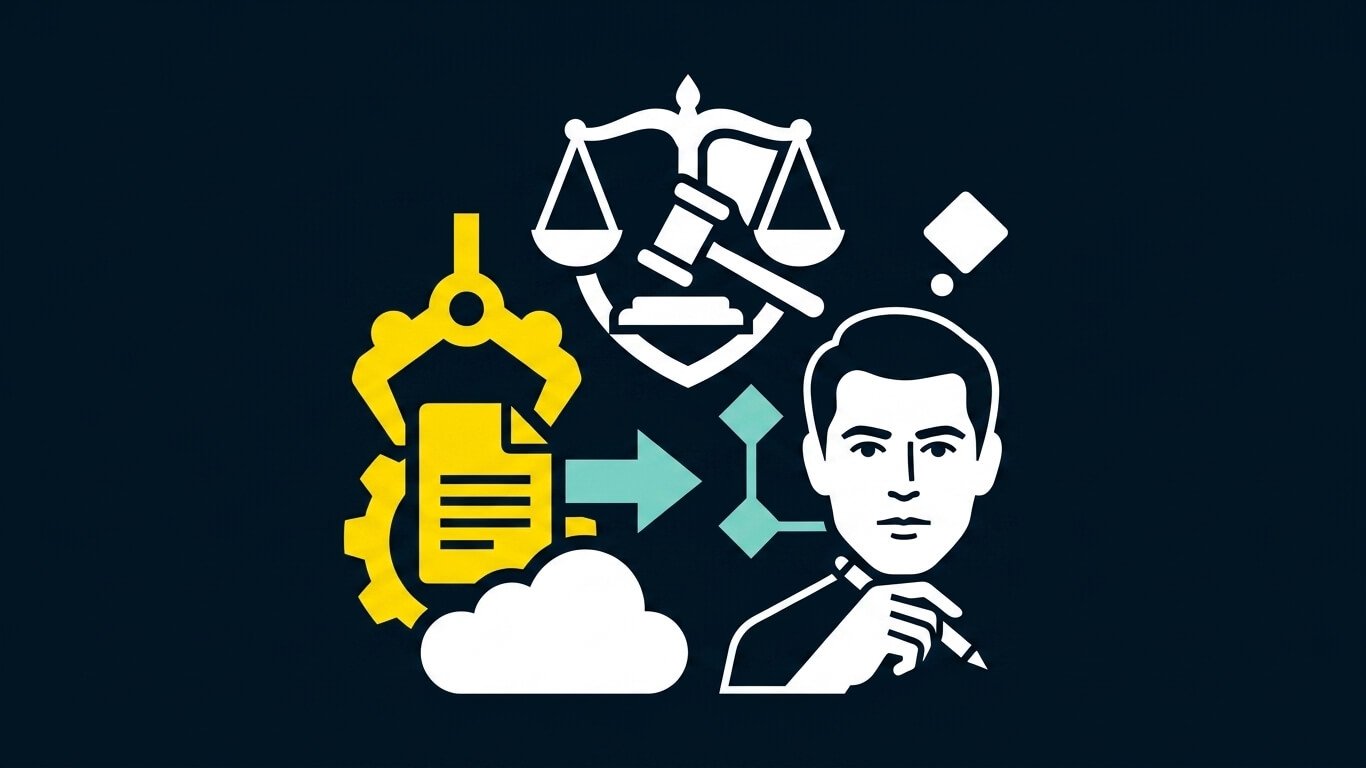
AI integration for business systems and specifically ai integration with crm platforms is not a plug-and-play exercise. In our delivery experience across enterprise financial services, 80% of AI-CRM integration delays are caused by undocumented legacy field mapping, not by the AI models themselves. What looks like a straightforward software upgrade is, in reality, a fundamental architectural shift in how your organisation processes, stores, and actions client data. For UK financial and investment firms, the ICO has already issued cross-border data transfer enforcement notices against firms that failed to adequately assess how externally processed data flows interact with UK GDPR obligations. The stakes are regulatory, operational, and financial and this guide maps every dimension of that risk so your deployment actually delivers value.
EXECUTIVE SUMMARYAI integration with CRM requires middleware engineering, rigorous data sanitisation, and UK GDPR compliance architecture. The true total cost of ownership for a mid-market UK firm ranges from £150,000 to £400,000. The most catastrophic failures are caused by bi-directional sync loops and unstructured legacy data, not the AI itself. This guide gives you the complete delivery picture before you commit a single pound of budget.
What AI Integration with a CRM Actually Means
Before evaluating cost or risk, decision-makers need precise definitional clarity. What is a CRM integration at a technical level? It is the secure, programmatic connection between your core client database and one or more external software applications, enabling data to flow bidirectionally or unidirectionally on a defined trigger or schedule. What is AI integration when applied to a commercial CRM database? It is the automated process of passing structured CRM object data contact records, deal stages, interaction histories, financial instruments to a Large Language Model via an Application Programming Interface, and returning structured outputs such as client summaries, next-best-action recommendations, or automatically updated field values. The AI does not live inside the CRM. It receives data, processes it, and returns a response. Understanding that boundary is the starting point for every architectural decision that follows.

How Data Actually Flows Between Your CRM and an LLM
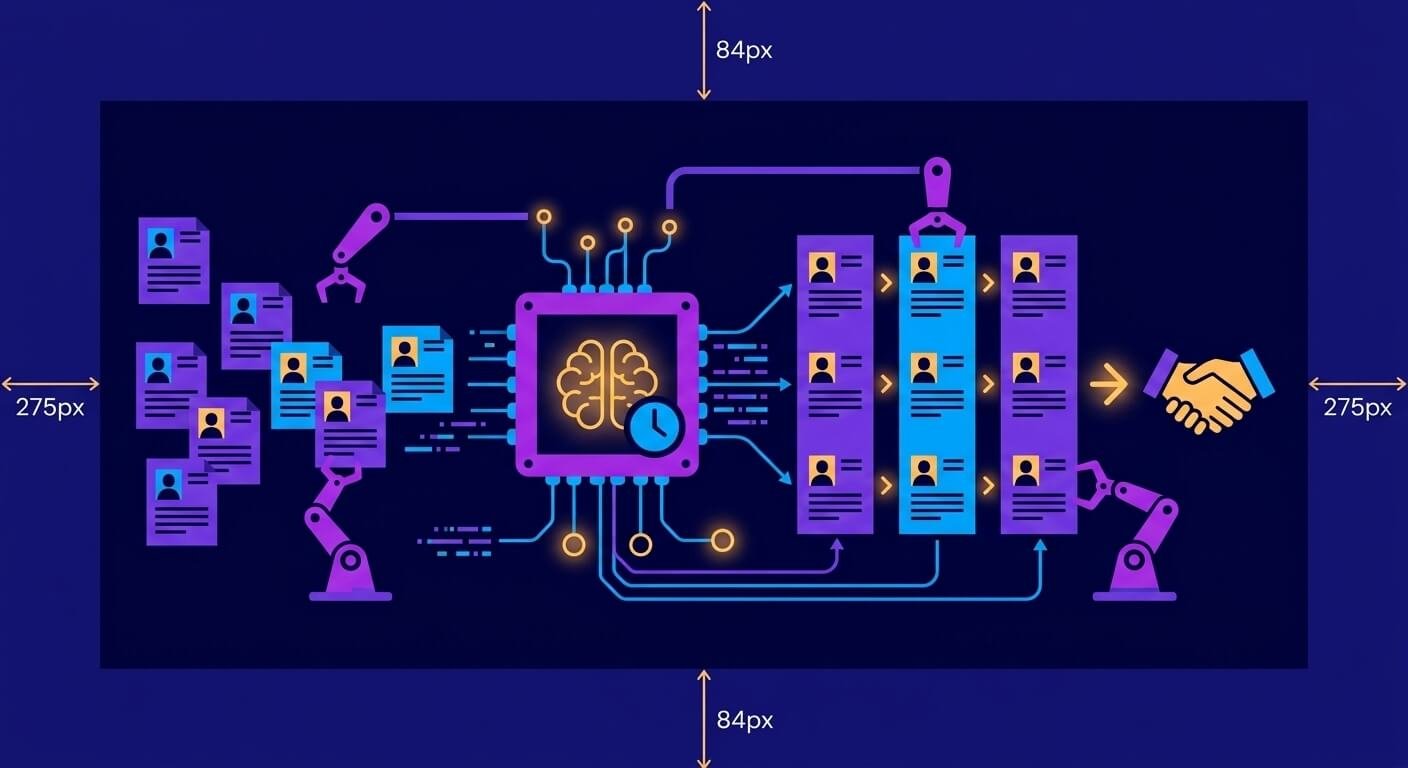
The marketing literature surrounding enterprise AI software consistently obscures the raw mechanics of data transit, and that obscurity is expensive. Data does not exist in a shared state between your CRM and an AI model. It must be extracted, transformed, and loaded through a precisely engineered pipeline. This transit occurs via one of three primary mechanisms: webhooks that fire an event-driven data push the moment a specific CRM field changes, such as a status update on a high-net-worth portfolio; Change Data Capture protocols that monitor the database transaction log and stream incremental updates to the AI layer in near real-time; or batch syncing processes that export volumes of historical CRM objects during off-peak hours for bulk AI processing. Each mechanism carries a distinct risk and cost profile that must be selected based on your operational requirements, not the vendor’s default configuration.
Understanding this architecture matters because the method of data transmission dictates both system performance and regulatory exposure. The following components form the architectural foundation of any production AI-CRM deployment.
- Webhooks providing real-time, event-driven data pushes to external AI API endpoints.
- Change Data Capture mechanisms streaming incremental database updates without full record exports.
- Batch syncing protocols processing historical CRM objects during off-peak operational hours.
- Middleware platforms acting as translation layers between proprietary CRM schemas and external LLM models.
- Payload definitions that strictly limit which fields leave the secure server environment.
- API rate-limit management logic preventing CRM lockouts during high-volume processing windows.
The True Total Cost of Ownership
Procurement departments consistently underestimate the financial commitment required to deploy an ai integrated crm system at enterprise scale. The vendor licensing fee is the smallest line item on the true total cost of ownership ledger. PrimeWise.co.uk provides independent TCO modelling for UK financial services firms evaluating AI integration into existing CRM infrastructure, specifically to remove the risk of vendor-biased cost projections that routinely omit the most expensive components. Based on delivery experience, three clear cost tiers emerge across the UK market.
For SME wealth managers and boutique investment firms, the initial integration investment typically falls between £25,000 and £75,000, covering basic API connectivity, limited middleware configuration, and a single-use-case deployment such as automated client meeting summaries. Mid-market firms requiring bespoke middleware, compliance architecture, and multi-workflow automation should budget between £150,000 and £400,000 for the initial build phase. Enterprise-scale deployments at established City institutions incorporating data sovereignty infrastructure, SMCR accountability mapping, and ongoing developer retainers routinely exceed £500,000 in year-one spend before token consumption costs are added.
Capital Expenditure on Middleware and Custom Development
The initial phase of any use of ai in crm infrastructure is heavily weighted towards custom engineering. Most legacy databases cannot communicate natively with modern LLMs. Organisations must either invest in an Integration Platform as a Service solution such as MuleSoft, Boomi, or Workato or commission fully bespoke API development. This capital expenditure encompasses a comprehensive tech stack audit, mapping potentially thousands of custom fields, writing contextual logic that tells the AI how a corporate account object relates to individual stakeholder contact records, and defining the data schema that governs which fields are permitted to leave the secure environment. Without this foundational investment, the AI receives decontextualised fragments of data and produces correspondingly unreliable outputs.
Hidden Operational Expenditure on Token Consumption
Once the integration is live, the financial ledger shifts to operational costs that consistently surprise technical teams. Unlike traditional software on a fixed monthly licence, AI in CRM deployments are billed on consumption. Every automated client summary, generative email draft, and data normalisation call consumes tokens. At 2025-2026 UK enterprise API pricing, OpenAI’s GPT-4o tier costs approximately $0.0025 per thousand input tokens and $0.01 per thousand output tokens at standard rates, while Microsoft Copilot for Dynamics 365 is licensed at approximately £24 per user per month with separate Azure OpenAI consumption charges layered above. Salesforce Einstein costs vary by cloud edition but typically add £50 to £150 per user per month at enterprise tier. For a firm running 500 automated AI interactions per day across a 50-seat CRM, monthly token costs alone can reach £8,000 to £20,000 depending on payload size and model selection. These figures are rarely included in initial vendor proposals.
COST WARNINGDeveloper retainer costs are ongoing, not one-off. Every time your CRM schema changes a new pipeline stage, a renamed custom field, a new product object the middleware integration must be updated to prevent payload mismatches and AI misinterpretation. Budget a minimum of £2,000 to £5,000 per month for schema maintenance at mid-market scale.
What Goes Wrong During AI-CRM Integration Delivery
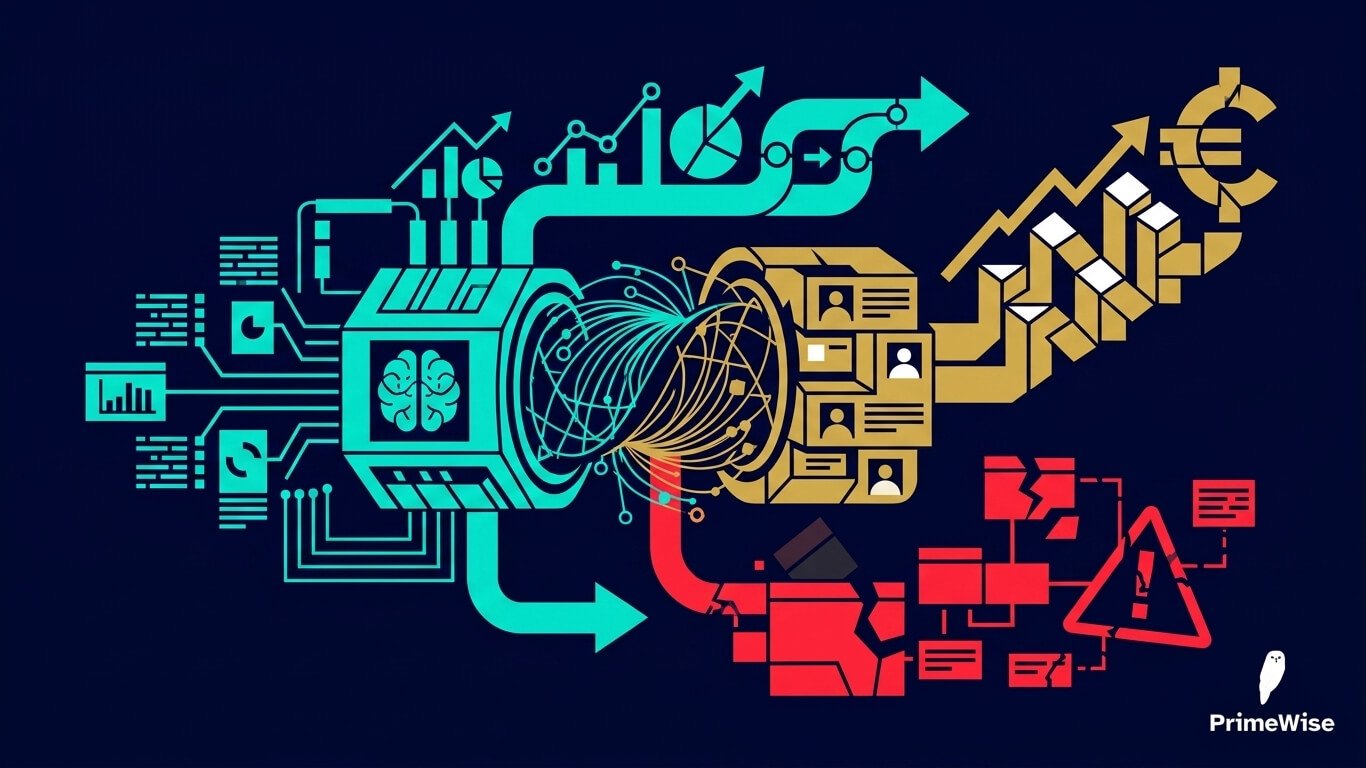
Deploying algorithmic tooling atop legacy databases carries substantial operational risk. When AI-CRM integrations fail in the financial sector, they rarely fail quietly. The resulting data corruption can halt trading desks, produce inaccurate client communications, and require hundreds of hours of manual database rollback procedures each of which carries its own regulatory exposure under FCA operational resilience requirements. The following failure typologies are drawn from direct delivery experience, not theoretical risk modelling.
Unstructured Legacy Data and the Garbage-In-Garbage-Out Problem
The most sophisticated LLM cannot compensate for poor database hygiene. When a wealth management firm attempts to run generative AI insights over a CRM containing unstructured sales notes typed freehand over fifteen years, duplicated contact records with conflicting phone numbers, and financial instrument data stored inconsistently across seventeen custom text fields, the AI will confidently generate flawed outputs. It does not know that it does not know. This garbage-in, garbage-out dynamic is the primary cause of abandoned integration projects across the UK financial sector. A mandatory data sanitisation, deduplication, and schema standardisation phase must precede any AI processing. In practice, this phase typically adds six to twelve weeks and £15,000 to £60,000 to a project timeline costs that were not in the original business case.
Bi-Directional Sync Loops and Overwritten Financial Records
The most severe technical failure mode in crm with ai integration projects involves misconfigured bi-directional synchronisation. Consider the delivery scenario: an AI model is granted write-back permissions to update a CRM field based on its analysis. That field update triggers a webhook, which fires a new data payload back to the AI, which generates a new update, which triggers another webhook. Without correctly structured idempotency logic and loop-detection guardrails, this cycle executes thousands of times per minute. In one documented delivery teardown, a poorly configured Change Data Capture setup caused an AI integration to systematically overwrite the historical transaction notes on over 3,000 client records within four hours before the loop was detected and the integration was suspended. Restoring data integrity required a full database rollback, a mandatory breach assessment under UK GDPR Article 33, and an internal SMCR accountability review. The prevention mechanism is straightforward every AI write-back must carry a source-tagged identifier so the middleware can detect and break circular update chains but it must be architected before go-live, not after.
Three AI Chatbot Failure Modes in UK Financial Services
AI chatbot integration with CRM platforms is one of the fastest-growing deployment categories in UK wealth management and retail banking, and simultaneously one of the highest-risk. When front-line client service bots connect directly to live CRM data without stringent guardrails, three distinct failure typologies emerge from delivery experience. First, prompt injection: a client types an unstructured query into the chat interface that contains syntax which manipulates the AI’s instruction set, causing it to retrieve and expose records it should not have access to. Second, hallucination of portfolio values: the chatbot receives stale CRM data a portfolio value last updated three days ago and presents it to the client as current, constituting a potential breach of FCA COBS 4 obligations on accurate client communications. Third, unauthorised data disclosure caused by insufficient role-based access controls on the CRM API, allowing the chatbot to surface records belonging to a different client segment than the authenticated user. Each of these failure modes has a specific technical mitigation, but none can be retrofitted easily after deployment.
FCA COMPLIANCE ALERTUnder FCA COBS 4 and the Consumer Duty (PS22/9), any AI-generated communication delivered to a retail client including chatbot responses referencing portfolio data may constitute a regulated financial promotion or advice. Firms must establish human-in-the-loop review thresholds and document the governance framework under which AI outputs are deemed compliant before deployment.

The UK Compliance Minefield Unique to AI-CRM Deployments
For UK financial institutions, technological capability is permanently secondary to regulatory compliance. The integration of AI into CRM architecture introduces legal challenges that traditional software deployments simply do not create, and three regulatory frameworks converge specifically on this technology stack: UK GDPR administered by the ICO, FCA Consumer Duty and conduct rules, and the Senior Managers and Certification Regime accountability framework.
Data Residency and Cross-Border LLM Processing
When evaluating the use of AI in CRM architectures, data sovereignty is the first and most non-negotiable requirement. Many leading Large Language Models including OpenAI’s API, Google Gemini, and Anthropic’s Claude process data on infrastructure located in the United States or across multiple international regions by default. Pushing personally identifiable information from a UK-based CRM to a US-based API endpoint constitutes a restricted international data transfer under UK GDPR Chapter V, requiring either an International Data Transfer Agreement, a Transfer Risk Assessment, or, in the absence of adequate safeguards, the ICO can impose enforcement action. The ICO’s updated Guidance on AI and Data Protection (2024) explicitly addresses automated processing of personal data by third-party AI providers and requires that data minimisation principles be applied at the payload level before data leaves the UK server environment. Enterprise firms are increasingly required to utilise geographically ring-fenced LLM instances AWS UK regions, Azure UK South, or Google Cloud europe-west2 or invest in on-premise AI processing to maintain full data residency compliance.
The Right to Be Forgotten Across AI Caches
A uniquely complex compliance obligation arises at the intersection of UK GDPR Article 17 and AI memory architecture. When a client requests erasure of their data, deleting their CRM record is no longer legally sufficient. The IT department must demonstrate to the ICO that the individual’s data has also been purged from any vector databases, embedding caches, fine-tuning datasets, or temporary processing stores used by the integrated AI models. This algorithmic disgorgement obligation is not hypothetical the ICO’s enforcement strategy for 2025-2026 explicitly includes AI data lifecycle compliance as an investigation priority. Demonstrating complete erasure across a multi-component AI-CRM architecture requires a data lineage tracking system that logs every instance where a specific client record has been ingested by the AI layer. Without this infrastructure in place at deployment, the firm cannot respond to a Subject Access Request or erasure request within the statutory 30-day window.
SMCR Accountability for AI-Generated Client Communications
The Senior Managers and Certification Regime creates a specific governance obligation that most technology teams overlook entirely. When an AI model integrated into your CRM generates a client communication a portfolio review email, a suitability assessment, a chatbot response to a complaint a named Senior Manager must hold documented accountability for the governance framework under which that communication was approved and sent. If the AI output breaches FCA conduct rules and no named individual holds accountability under SMCR, the firm faces both the conduct breach penalty and a separate SMCR accountability failure. The FCA’s current consultation on AI model risk (CP24/2 framework) is moving towards requiring firms to maintain model risk management documentation for any AI system that influences a regulated output, including CRM-driven automated communications. This accountability chain must be mapped and documented before any AI integration goes live.
Native Ecosystems Versus Bespoke Middleware
Organisations face a critical architectural choice between leveraging out-of-the-box vendor AI capabilities and commissioning custom development. This build-versus-buy decision is the single largest variable in both the cost model and the compliance architecture of a deployment. The right answer depends almost entirely on the complexity of the firm’s existing infrastructure and the specificity of its regulatory obligations.
Salesforce Einstein, Microsoft Copilot, and Zoho Zia Evaluated
The three dominant CRM platforms have each launched proprietary AI layers that promise to simplify deployment by eliminating the need for custom middleware. Salesforce Einstein is deeply embedded into the Salesforce platform architecture, offering predictive lead scoring, automated activity capture, and generative email drafting natively within Sales Cloud and Financial Services Cloud. Its primary advantage is that data stays within the Salesforce trust boundary, which simplifies UK GDPR compliance architecture. Microsoft Copilot for Dynamics 365 leverages Azure OpenAI and processes data within the Microsoft Cloud for UK regions when correctly configured, offering a credible data residency path for firms already operating within the Microsoft ecosystem. Zoho’s native AI assistant, Zia, provides anomaly detection, workflow suggestions, and conversational data queries within Zoho CRM without requiring external API calls, making it a viable entry point for SME firms with limited compliance infrastructure.
For firms specifically exploring ai integration with zoho crm, the ecosystem extends beyond Zia into third-party enrichment and automation layers. Apollo.io offers an AI-powered prospecting and data enrichment layer that connects to Zoho CRM via native integration or Zapier workflows, automatically updating contact records with verified firmographic data and engagement scores. The apollo ai integration with zoho crm workflow is particularly popular with mid-market B2B firms where prospecting velocity matters, but UK-regulated financial firms must assess Apollo’s US-based data processing against their UK GDPR Transfer Risk Assessment requirements before activating automated field writes. AiSensy provides WhatsApp Business API automation with CRM connectivity, and the aisensy integration with zoho crm configuration enables automated client communication workflows triggered by CRM stage changes a powerful capability for client onboarding sequences, but one that requires explicit WhatsApp consent capture to be mapped within the CRM record under UK GDPR lawful basis documentation. Every native ecosystem integration that claims seamless ai integration with zoho crm or equivalent plug-and-play simplicity must still be assessed against UK data residency, consent architecture, and FCA communication obligations before activation.
Architecting Bespoke Middleware for Legacy UK Infrastructure
For established wealth managers and City institutions operating heavily customised or on-premise legacy CRM environments, native platform AI plugins are rarely architecturally viable. The CRM schema is too bespoke, the compliance requirements too specific, and the regulatory accountability chain too demanding for an out-of-the-box tool to accommodate. These organisations must architect bespoke middleware typically built on MuleSoft Anypoint, Azure API Management, or a custom Node.js or Python integration layer that acts as a secure, auditable bridge between the legacy database and the AI model. This approach requires significantly higher upfront investment and a six-to-eighteen-month development timeline, but it delivers total control over data transit paths, field-level encryption, payload minimisation, and audit log generation. For firms under FCA supervision, the ability to produce a complete audit trail of every AI data interaction is not optional it is the architecture.
The PrimeWise CRM-AI Readiness Matrix
To mitigate the technical and regulatory risks outlined above, PrimeWise.co.uk has developed the CRM-AI Readiness Matrix a five-dimension diagnostic framework used as the foundation of every AI integration advisory engagement. The Matrix scores each dimension on a scale of one to five, generating a composite readiness score that determines whether an organisation is ready to proceed to build phase, must complete a remediation programme first, or requires fundamental architecture redesign before any AI layer is viable. The five dimensions are as follows.
Dimension One Data Hygiene and Schema Fidelity
Every custom object, relationship, and field within the CRM must be documented with complete fidelity before integration begins. The AI model requires explicit contextual rules defining how a corporate account object relates to individual stakeholder contact records, how a financial product object maps to a client portfolio record, and which fields carry regulatory significance versus operational convenience. A score of one in this dimension meaning undocumented schemas and inconsistent field naming is an absolute blocker. No AI integration should proceed until schema documentation reaches a minimum score of four. This phase typically requires four to eight weeks of dedicated database architecture work and is the primary source of the project delays cited at the opening of this article.
Dimension Two Compliance Architecture Completeness
This dimension assesses whether the organisation has completed a UK GDPR Transfer Risk Assessment for the chosen AI provider, documented the lawful basis for AI-driven client profiling under one of the six bases available under UK GDPR, mapped erasure obligations to the AI data lifecycle, and assigned SMCR accountability for AI-generated outputs. A score below three in this dimension means the organisation is not legally prepared to process client data through an external AI model, regardless of how technically ready the CRM infrastructure may be.
Dimension Three API Resilience and Fallback Architecture
Enterprise systems must be engineered for the inevitable reality that external API connectivity will fail. This dimension evaluates whether the integration has defined API latency tolerances, configured asynchronous processing queues that prevent CRM freezing during AI response delays, and programmed automated fallback protocols that revert the CRM to standard manual operations if the AI layer goes offline. Firms that score below three in this dimension risk client service disruption every time the AI API experiences downtime an operational resilience failure that the FCA expects to be managed under PS21/3 operational resilience requirements.
Dimension Four Bi-Directional Write Governance
This dimension specifically evaluates the logic gates controlling any AI write-back permissions to CRM fields. It assesses whether idempotency keys are implemented on all AI-generated updates, whether loop-detection guardrails are configured in the middleware, whether all AI-written field values are tagged with a source identifier distinguishing them from human-entered data, and whether a human-review threshold is defined for AI-generated outputs above a specified confidence or impact level. A score of one or two in this dimension meaning AI has unrestricted write-back permissions with no loop detection represents the single highest technical risk in the entire integration architecture.
Dimension Five Ongoing Governance and Change Management
The final dimension assesses the organisational readiness to maintain the integration over time. This includes whether a named developer retainer is in place to update middleware when the CRM schema changes, whether a model performance review cadence is documented, whether token consumption is monitored against a budget threshold that triggers a review, and whether the SMCR accountability assignment for AI outputs is reviewed when personnel change. AI-CRM integrations that score well on dimensions one through four but fail on dimension five routinely degrade into compliance liabilities within twelve to eighteen months as the organisation evolves but the integration architecture does not.
READINESS CHECKThe PrimeWise CRM-AI Readiness Matrix is the diagnostic foundation of every AI integration advisory engagement at PrimeWise.co.uk. If your organisation cannot score at least 3 out of 5 across all five dimensions before build phase begins, the integration will cost significantly more than projected and carry unacceptable regulatory risk.